



Quick Summary: Acupuncture works best when matched to the headache type, with local neck and occipital points for tension pain, early distal and scalp points for migraines, and cervical points for neck-driven headaches. A course of six to ten sessions may reduce headache frequency or severity, and practitioners often tailor treatment through tongue, pulse, symptom, and lifestyle assessment. It should complement prescribed care, not replace it, and sudden severe headaches, fever with neck stiffness, neurological symptoms, or other warning signs require medical evaluation first.
Two people write “headache” on the same intake form, yet they leave with different acupuncture treatments for headaches. One feels a tight band after hours on screen; the other has throbbing pain on one side, worse with light. Because these patterns differ, so do the points and session plans. This guide separates tension-type, migraine and cervicogenic headaches, and explains how acupuncture treatments for headaches are matched to each one.
Matching the Treatment to Your Headache Type
Acupuncture is not one protocol. The point groups and session rhythm change with the headache pattern, so the first step is a correct diagnosis.
Tension-Type Headache: Local and Occipital Points
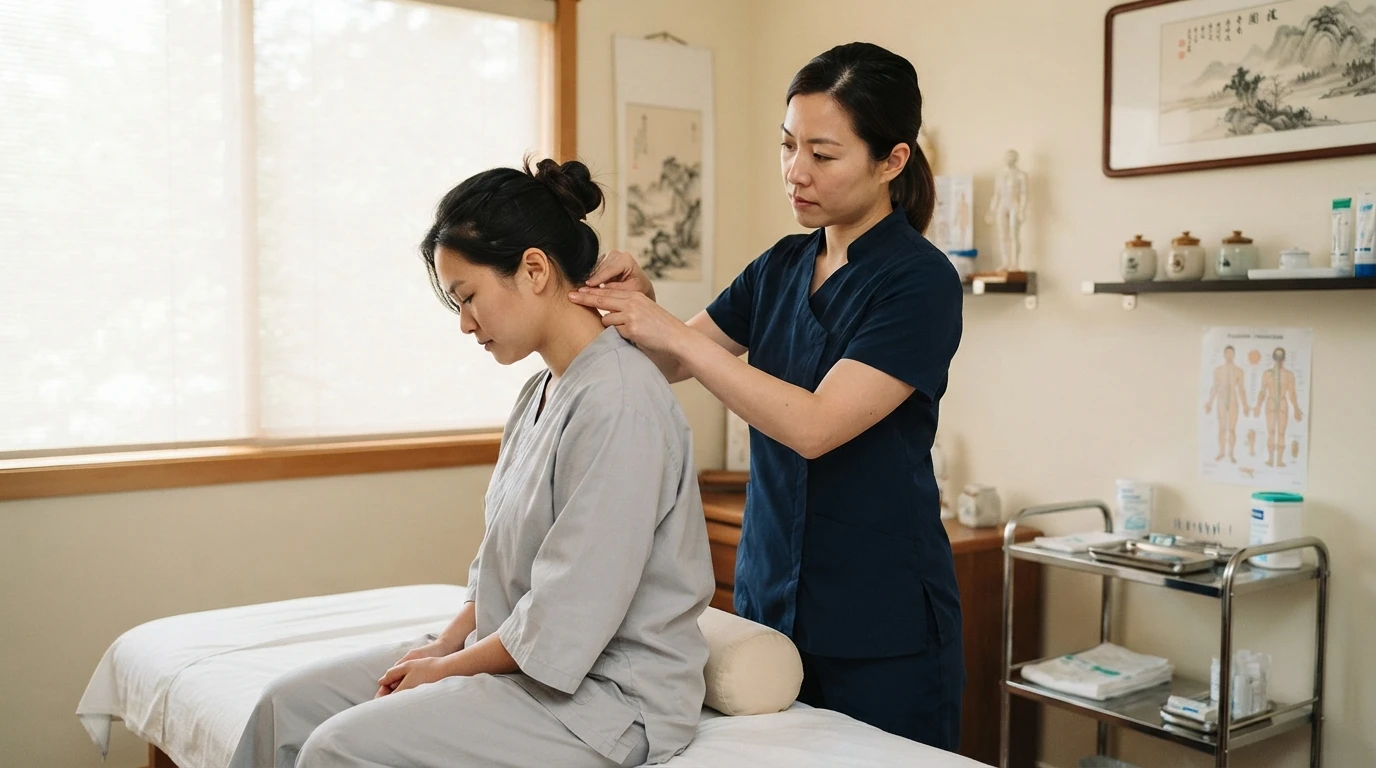
Tension-type headaches feel like a tight band across the forehead or the back of the skull. Practitioners usually treat local points at the temples and the occipital region, plus neck and upper-back trigger points that refer pain upward. A Cochrane review found that a course of at least six sessions can reduce headache days, so plan for weekly visits rather than one-off relief.
Distal Points at Attack Onset
Migraines respond best when treatment starts early. Clinicians often combine points on the hand and foot, such as LI4, TE5, LV3 and GB41, with scalp points, because distal needling calms the rising pattern typical of migraine. In traditional Chinese medicine terms, this clears wind and liver yang. Some practitioners, including those at Medicina Cinese, tailor these combinations after checking tongue and pulse signs.
Cervicogenic and Secondary Patterns
Headaches driven by the neck (cervicogenic) need cervical and shoulder points, not head work alone. Sudden “worst-ever” headache, fever or neurological signs are red flags: see a doctor first.
What Happens in a Course of Treatment
Assessment and Pattern Diagnosis
The first visit is mostly conversation. Your practitioner asks about headache location, timing, triggers, sleep, digestion and stress, then checks the tongue and pulse to build a pattern diagnosis in the Chinese medicine sense: which system is out of balance and why. Two patients with migraines can get very different point prescriptions because their patterns differ. At Medicina Cinese this assessment shapes a fully personalized plan rather than a fixed headache protocol.

Session Cadence and Progress Tracking
Courses follow a predictable rhythm. NICE guidance suggests up to 10 sessions over five to eight weeks for chronic tension-type headache, and migraine studies used at least six sessions, often weekly at first. Sessions then space out as headaches ease. You and your practitioner track frequency and intensity in a diary, so results, not habit, decide when to stop.
Acupuncture is a support, not a substitute for diagnosis. Some headaches signal a serious problem and need a doctor first.
Red Flags That Need Medical Evaluation First
Stop and seek medical care if a headache is sudden and severe like a thunderclap, follows a head injury, or comes with fever and a stiff neck. Weakness, numbness, vision loss, confusion or a seizure are classic warning signs that a headache may be secondary to another illness, not tension or migraine.
Where the Evidence Is Weaker
Evidence is strongest for tension-type headache and migraine prevention. It is thinner for cervicogenic headache, cluster headache and hormonal migraine, where acupuncture may ease pain but rarely replaces conventional treatment.
Treat it as one part of a plan that includes medical review, sleep and trigger management.
Integrating Acupuncture With Standard Care
Working Alongside Medication, Not Instead of It
Acupuncture works best as an add-on. Keep taking prescribed preventives and painkillers while starting a course of sessions, and only change doses with your doctor. Studies comparing acupuncture against standard medical care for migraine found both groups improved, so combining them may help more than either alone. Tell your practitioner about every medication you use, since this shapes the pattern diagnosis. Integrative approaches like acupuncture within integrative health start from your existing treatment plan.

If recurrent headaches keep stealing your focus, personalized acupuncture at Medicina Cinese offers a drug-free way forward. Book a consultation today and get a treatment plan built around your pattern.
Frequently Asked Questions
Q1: Explain how acupuncture treatments are commonly used for headache and migraine support.
Fine needles at chosen points, matched to your headache pattern, calm pain signals and ease neck tension. Courses of six to ten weekly sessions work best as prevention, alongside your regular medication.
Q2: How many sessions before I notice a change?
Most people see fewer or milder headaches within four to six weekly sessions. Track frequency and intensity in a diary so progress, not habit, decides the pace.
Q3: Does acupuncture hurt?
Usually no. You may feel a brief prick or dull ache when a needle lands, then deep relaxation. Needles are hair-thin and most stay in for twenty to thirty minutes.
Q4: Can I keep taking my headache medication?
Yes. Continue prescribed preventives and painkillers, and tell your practitioner everything you take. Only adjust doses with your doctor once headaches clearly improve.
Conclusion
Headaches respond to acupuncture best when the pattern is clear: tension-type, migraine and cervicogenic pain each need different points and session rhythms. Start with a proper diagnosis, plan six to ten sessions, respect the red flags, and keep your doctor in the loop.