


Quick Summary: Light sadness often stems from stress, poor sleep, or skipped meals, but it is distinct from clinical depression and lightheadedness, which may signal dehydration or medical issues. TCM, including acupuncture and herbs, may offer modest support for mood and energy, but it should complement, not replace, medical care. Seek urgent help for red flags like self-harm thoughts, fainting, or chest pain, and book a medical review if low mood lasts two weeks or more. Medicina Cinese offers personalized acupuncture and herbal support, but always coordinate with a clinician first.
Weeks of deadlines, poor sleep, and skipped meals can bring light sadness. That differs from lasting low mood with faintness on standing, though both may lead people to search for light sadness or lightheadedness. This guide separates common sadness causes from mild depression and subthreshold depression. It also explains when medical checks matter and how individualized TCM for sadness may support sleep, stress, energy, and light sadness safely.
What Light Sadness and Lightheadedness Can Mean
Sadness Is Not Always Depression
Brief sadness can follow stress, poor sleep, loss, or a hard week. Depression is more than feeling low: symptoms persist, affect daily life, and often include loss of interest, sleep or appetite changes, and poor focus, as NIMH explains.
Seek urgent local help if sadness includes thoughts of self-harm, hopelessness, or feeling unsafe.
Lightheadedness Is a Separate Symptom
Lightheadedness means feeling faint or unsteady, not necessarily sad. It may relate to dehydration, missed meals, standing up quickly, illness, medication, or anxiety. Note when it happens and any triggers.
- Sit or lie down if you feel faint.
- Seek medical assessment for new, severe, recurring, or chest-pain-related symptoms.
Also Read: How Acupuncture Promotes Inner Peace Through Nervous System Regulation
Common Causes of Light Sadness and Related Lightheadedness
Emotional Stress, Loss, and Burnout
Work pressure, conflict, grief, money worries, or caring for others can leave you flat and drained. Low mood often follows difficult events, though it may also appear without a clear reason, according to the NHS guide to low mood.
Sleep, Food, Hydration, and Training Load
Poor sleep can lower patience, focus, and mood. Skipped meals, hard training, heat, or not drinking enough may add fatigue and lightheadedness. Dehydration commonly causes thirst, tiredness, dizziness, and dark urine, notes the NHS.

Medical Conditions and Medicines
Anaemia, thyroid issues, diabetes, infection, and low blood pressure can affect energy, mood, or balance. Some medicines can also cause dizziness. Do not stop a prescribed drug yourself. Ask a clinician or pharmacist to review new symptoms.
Seek urgent help for fainting, chest pain, weakness on one side, confusion, or thoughts of self-harm.
Also Read: 7 Acupuncture Points Women Explore for Emotional Balance
How TCM May Approach Sadness and Lightheadedness
The TCM Assessment and Pattern Framework
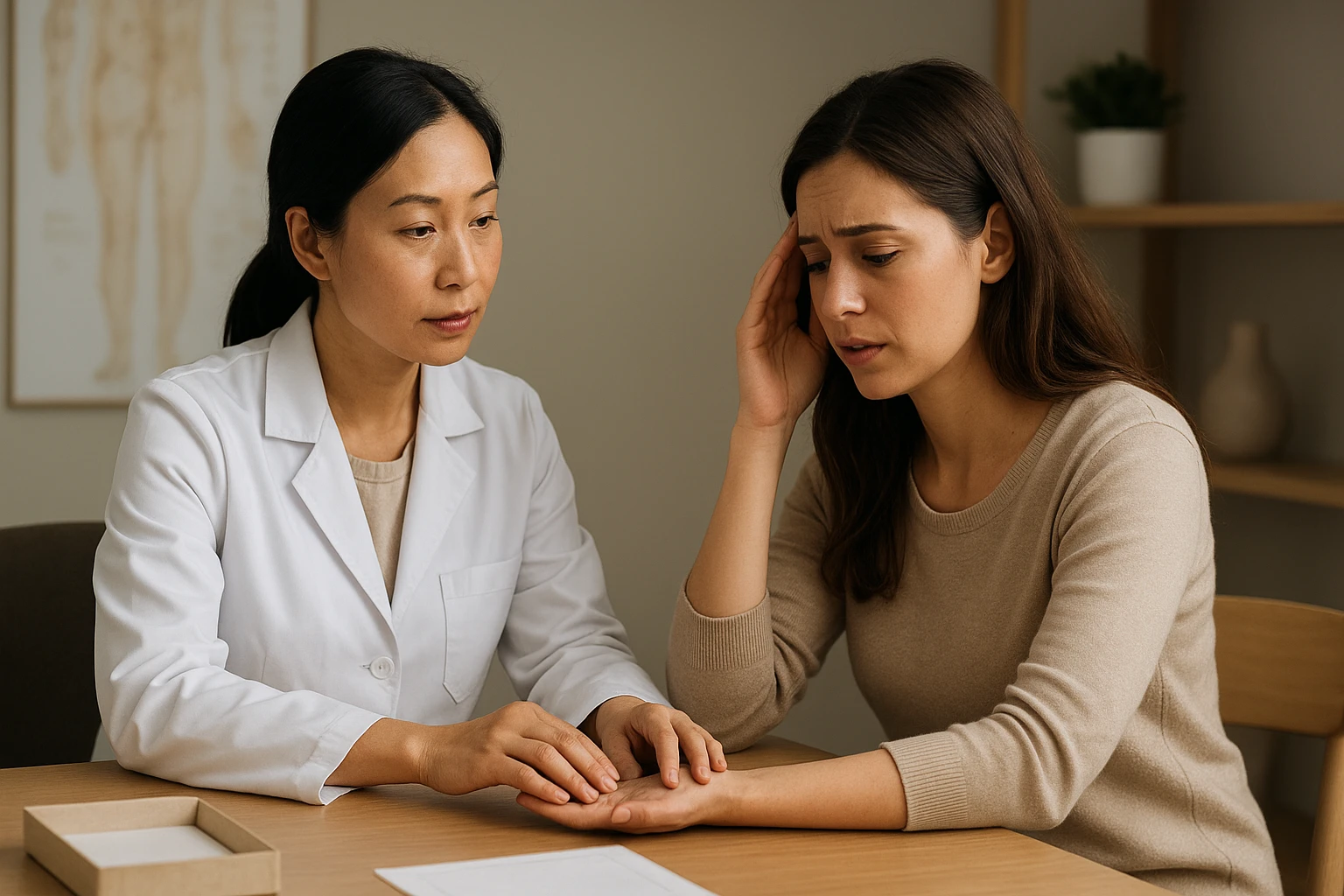
A TCM visit looks for patterns, not one label. The practitioner asks about sleep, stress, meals, cycle, digestion, energy, and when lightheadedness occurs. They may assess the tongue and pulse, then tailor care alongside medical assessment.
Acupuncture and Related TCM Therapies
Acupuncture may support sleep, tension, and low mood as part of wider care. Evidence suggests a modest effect on depression symptoms, but it does not replace mental health treatment according to NCCIH. Breathing work or gentle movement may also be advised.
Seek urgent medical help for fainting, chest pain, new weakness, or suicidal thoughts.
Chinese Herbal Medicine and Safety
Herbal formulas should match the individual pattern and current medicines. Quality and interactions matter: some TCM products have safety concerns, including contamination reported by NCCIH. Share every prescription, supplement, and health condition with your clinician.
Also Read: Burnout Recovery: How Tai Chi and TCM May Restore Energy
When to Seek Medical Help and How to Choose Care
Red Flags That Should Not Wait
Get urgent help for thoughts of self-harm, suicide, or harming someone else. Seek emergency care for fainting, chest pain, severe shortness of breath, new confusion, or one-sided weakness.
- Book a medical review if low mood lasts 2 weeks or more
- Go sooner if work, sleep, eating, or relationships are suffering
NHS guidance advises medical support when low mood persists or feels hard to manage.
In Italy, call 112 for an immediate emergency.
Building a Safe Complementary Care Plan
Start with a GP or mental health clinician to rule out physical causes and discuss treatment. Then choose a qualified TCM practitioner who checks medicines, herbs, supplements, and mental health history.
- Keep your clinician informed.
- Set clear goals.
- Review progress after a few visits.
Acupuncture or herbs should support, not replace, urgent or prescribed care.

Feeling persistently low? Medicina Cinese offers personalized acupuncture, herbal support, and coaching to help you regain balance safely.
Frequently Asked Questions
Q1: What causes light sadness and how is it treated in traditional Chinese medicine?
Stress, poor sleep, grief, and health issues can play a part. TCM may use acupuncture, herbs, and routine changes after an individual assessment.
Q2: What causes light headedness and dizziness?
Dehydration, low blood pressure, inner-ear problems, missed meals, or medicine side effects may cause it. Seek urgent care for sudden weakness, chest pain, or speech changes.
Q3: How does traditional Chinese medicine treat dizziness?
A practitioner first checks likely patterns and medical risks. Treatment may include acupuncture, herbs, food advice, rest, and stress support alongside medical care.
Q4: Can acupuncture help with light headedness?
It may help some people when stress, tension, or poor sleep contribute. It should not replace medical assessment for new, severe, or recurring symptoms.
Conclusion
Light sadness can stem from stress, sleep, health, or life changes. TCM may support wellbeing, but it does not replace assessment. If low mood persists for two weeks or disrupts life, seek care, as NIMH advises.