



Quick Summary: Remote Chinese medicine suits chronic complaints such as digestive issues, sleep problems, migraines, and hormonal patterns, along with stress support, treatment follow-ups, and second opinions. Video consultations can assess tongue and visual signs, prescribe herbs, and guide acupressure, but pulse diagnosis, needling, cupping, injuries, and physical testing require in-person care. Chest pain, breathing trouble, sudden weakness, heavy bleeding, high fever, and severe unexplained pain need a doctor first. Medicina Cinese recommends preparing medication lists, symptom history, good lighting, and an unaltered tongue before the session.
A video call cannot reveal a wiry pulse or a thin yellow tongue coat. Even so, online Chinese medicine is the most practical first step for many people, especially those travelling between Milan, Lugano and Sardinia. The real question is who qualifies. This guide, based on Medicina Cinese’s clinical framework, maps which complaints suit Chinese medicine telehealth, which still need hands-on online acupuncture follow-up or an in-person visit, and which red flags demand a doctor first.
Who Benefits Most From Online Chinese Medicine
Online Chinese medicine works best when the diagnosis rests on history, tongue and visual signs rather than hands-on touch. Three groups fit that profile well.

Long-Standing, Pattern-Based Complaints
Chronic digestive trouble, sleep problems, migraines and hormonal patterns develop over years. Their diagnosis depends on a detailed history, tongue colour and coating, and complexion, all of which a good webcam captures. Herbal formulas can be adjusted remotely between visits.
Stress, Burnout and Performance Support
Executives and athletes often need fast, flexible access. Energy work, breathing protocols and herbal support for focus and recovery translate well to video, with no waiting room before a demanding day.
Follow-Up, Maintenance and Second Opinions
Once a treatment plan exists, remote check-ins track progress and fine-tune prescriptions cheaply. Telehealth also lets you test a practitioner’s reasoning before committing to travel. Booking a first remote consultation takes the same five steps whether you live in Milan or Lugano.
What Works Remotely and What Does Not
What a Remote Session Can Genuinely Deliver
A video consultation handles diagnosis well: tongue reading, pulse questioning, sleep, digestion and stress history all translate to a screen. Herbal prescriptions, lifestyle plans and follow-ups work the same way. Booking well for a remote consultation is mostly preparation, not paperwork.
Online Acupuncture Without the Needles
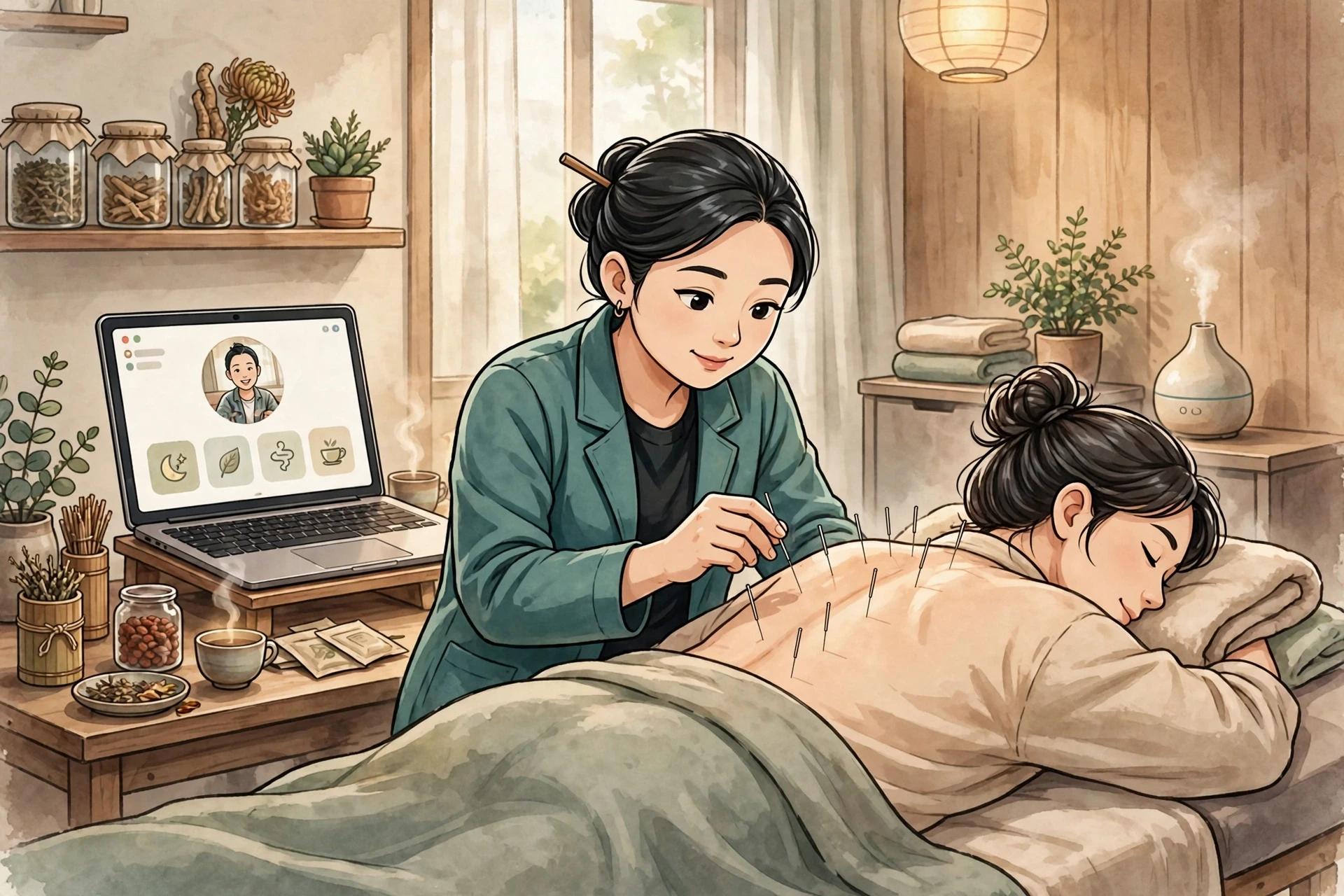
Needles obviously require presence, but a trained practitioner can still guide acupressure, self-massage and moxibustion alternatives over video, targeting the same meridian points used in an in-clinic session. It will not match needle stimulation, yet many patients find it enough between treatments.
Why Some Elements Always Need Hands-On Care
Pulse diagnosis by touch, cupping, real needling and musculoskeletal work stay in-person only. If your complaint involves joint pain, injury or anything a practitioner must physically test, expect a blended plan: remote consults plus occasional clinic visits. Red flags like chest pain or sudden numbness belong with a doctor first, as NCCIH guidance on TCM use stresses.
Who Should Not Rely on a Remote Consultation
Some problems should never start with a video call. Know the three groups below before booking anything.
Red Flags That Need Medical Attention First
Chest pain, trouble breathing, sudden weakness, heavy bleeding, high fever, or severe unexplained pain belong in an emergency room or your doctor’s office. Triage these first, then consider Chinese medicine as support once acute care has ruled out danger.
Cases Needing In-Person Assessment First
First acupuncture treatment, complex pain, and injuries that need hands-on testing of joints, pulse, or abdominal diagnosis usually need a clinic visit. Check what an in-person first acupuncture session involves before deciding on remote care.
Situations Where Distance Itself Is the Main Reason
Cupping, moxibustion, tuina massage, and needle work can’t happen over video. Herbal or lifestyle advice can.
How to Get More From a Remote Chinese Medicine Session
What to Prepare Before the Call
Good light and a quiet room matter more than fancy equipment. Have your current medications, supplements, and recent lab results at hand. Eat normally beforehand, since tongue diagnosis works best on an unaltered tongue. Write down when symptoms started and what makes them better or worse. Sessions that build on herbal prescriptions benefit from a short list of past formulas you have tried.
After the Consultation
Note the practitioner’s instructions the same day, while details are fresh. Take herbal formulas as directed and log any changes for two weeks. Book the follow-up before energy fades from the plan, and mention side effects early instead of stopping on your own. Small, honest updates make the next video check far more accurate.
Not sure if your concern suits a video visit? Book a remote consultation with Medicina Cinese and get a personalized herbal plan from home.
Frequently Asked Questions
Q1: Which patients benefit most from remote Chinese medicine consultations?
People with chronic, pattern-based complaints like sleep trouble, migraines, digestive or hormonal issues, plus stressed executives and athletes wanting flexible support and follow-ups.
Q2: Can herbs be prescribed remotely?
Yes. Herbal formulas are prescribed and adjusted after a video consultation, based on your history, tongue, and symptoms.
Q3: What if I need acupuncture?
Start remotely with a diagnosis and guided acupressure, then plan an in-person session for needles, cupping, or hands-on testing.
Conclusion
A remote consultation suits chronic, pattern-based complaints, stress support, and follow-ups; red flags and hands-on diagnoses still need a clinic. Prepare your tongue, light, and history well, and a video visit can rival an in-person one for accuracy.