



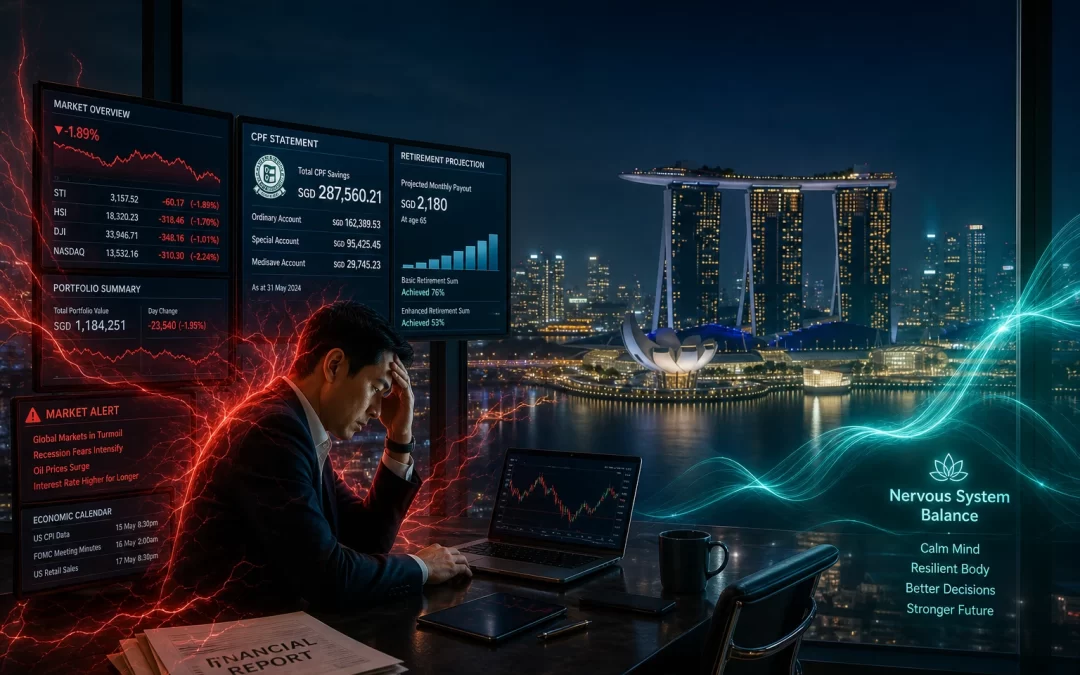
ASTI Holdings Joins CPFIS: More Investment Choices for Singapore — But Who’s Managing Your Mental Load?
ASTI Holdings Is Now CPFIS-Eligible. Here’s the Part No One Is Talking About.
If you follow Singapore’s investment landscape, you already know the headline: ASTI Holdings Limited shares are now eligible for investment using CPF Ordinary Account funds under the CPF Investment Scheme from 11 May 2026, allowing Singapore investors to use up to 35% of their investible CPF OA savings to buy ASTI shares on the SGX Mainboard.
For ASTI shareholders and anyone looking to put their CPF savings to work beyond the standard 2.5% OA interest rate, this is a meaningful development. The CPFIS inclusion broadens access to ASTI’s stock for Singapore investors, potentially boosting liquidity and strengthening its position in the local equity market.
But here is what the financial news cycle won’t cover: for the already stretched Singapore professional — managing a demanding career, a household, a portfolio, and their own mental bandwidth — every new CPFIS-eligible stock is not just an opportunity. It is one more decision. One more thing to research, track, compare, and worry about.
And that accumulation, quietly, costs more than most people realise.
钱要管好,也要管好自己的身体
“Managing your money well means managing your body well too.”
The Singapore Investor’s Real Problem: The Mental Load Behind the Portfolio
Singapore’s investment culture is among the most engaged in the region. CPF optimisation, dividend income strategies, SGX stock selection, REITs — the level of financial literacy among Singapore’s professional class is genuinely impressive.
With 14 different investment product categories available under CPFIS — shares, unit trusts, ETFs, fixed deposits, gold, bonds — and an expanding list of eligible stocks, the decision landscape for the active Singapore investor has never been more complex.
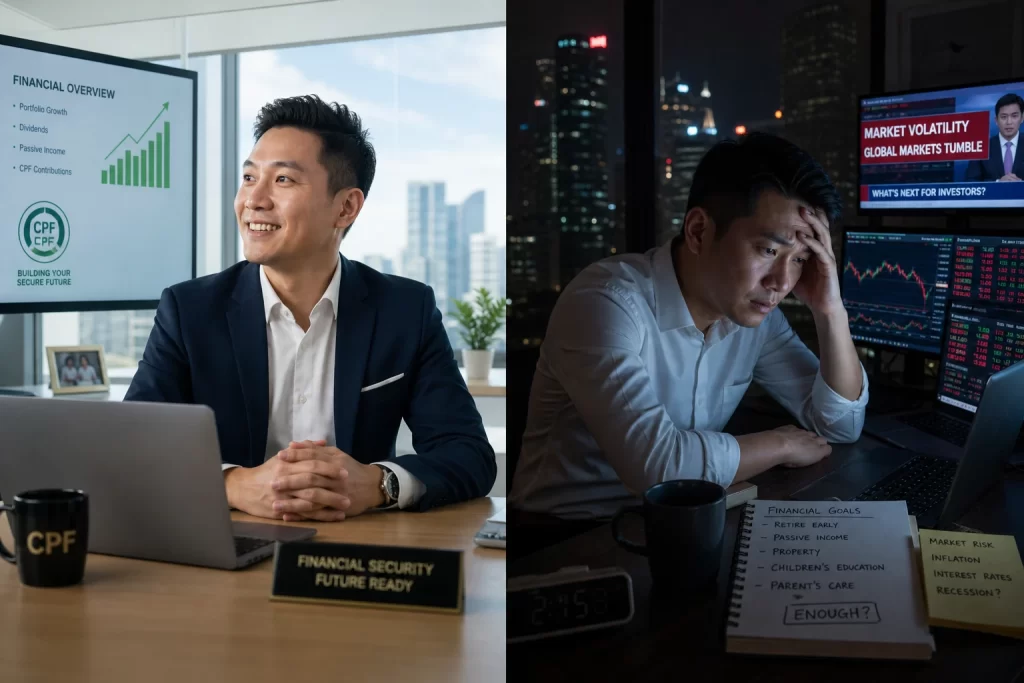
The mainstream financial media frames this entirely as a positive: more choice, more potential return. And structurally, that is true. The CPF Board is also introducing a new life-cycle investment scheme in 2028, providing members with an additional investment option to complement the existing CPF’s risk-free interest rates and the CPFIS.
But the human nervous system does not process “more options” as purely positive. Research in decision psychology is unambiguous: as choice complexity increases, so does cognitive load, cortisol output, and the subjective experience of chronic low-grade stress. Even when the market is performing well. Even when you are making good decisions.
The investor who spends evenings researching whether DBS, CapitaLand, or ST Engineering better fits their CPF portfolio — on top of a full day of professional and family demands — is not in a state of financial mastery. They are in a state of chronic mental overextension. And it is affecting far more than their investment decisions.
What Chronic Financial Vigilance Actually Does to Your Biology
This is a clinical reality that sits at the intersection of neuroscience, performance medicine, and Traditional Chinese Medicine — and it is almost entirely absent from conversations about wealth building in Singapore.
Sustained financial vigilance creates a specific stress signature in the body. It is not dramatic. There is no single crisis moment. It is the low hum of constant monitoring — market alerts, portfolio checks, earnings releases, macro news — that keeps the sympathetic nervous system in a state of background activation it was never designed to maintain indefinitely.

The physiological consequences are well-documented:
Cortisol chronically elevated. The stress hormone that evolved to help you sprint from a predator is now running at a low-grade simmer all day, every day. Over months and years, this degrades immune function, disrupts hormonal balance, and accelerates biological ageing.
Sleep architecture deteriorated. The mind that runs portfolio calculations at 11pm does not enter deep sleep efficiently. Non-restorative sleep then degrades the cognitive quality that your investment decisions — and your career — depend on.
Decision fatigue compounding. Every financial decision made draws from the same neural resource pool as every professional and personal decision you make. By the time you are assessing a CPFIS opportunity at 9pm, you are not operating at your peak analytical capacity. You are operating on cognitive residue.
Presence quietly eroding. Many high-performing clients I work with describe this precisely: successful on paper, but rarely fully present. Not quite at work, not quite at home, because some part of the mind is always on the portfolio, the career, the next decision.
In Traditional Chinese Medicine, this pattern maps to Kidney Qi deficiency combined with Liver Qi stagnation — the classic presentation of the over-functioning modern professional whose system has been giving out more energy than it has been replenishing. The body is telling you something the spreadsheet cannot.
The Wealth Paradox No One Names
Here is the paradox at the centre of Singapore’s high-performance culture: the ambition that drives wealth accumulation is the same force that, unmanaged, degrades the mental and physical capacity needed to sustain it.
The executive who is tracking CPFIS opportunities, managing a team, parenting, maintaining a social profile, and trying to stay healthy is not doing one thing with full presence. They are doing six things with fractured attention. The compounding effect is not financial — it is biological. And unlike portfolio losses, biological depletion does not announce itself with a clear number. It arrives slowly, then suddenly: as burnout, illness, a strategic mistake made from exhaustion, a relationship eroded by chronic absence.
True wealth — the kind that sustains over decades, not just quarters — is not portfolio growth alone. It is the cognitive clarity to make good decisions consistently. The emotional regulation to handle volatility without reactive behaviour. The energy to be fully present in the life the wealth is supposed to serve.
That is not a philosophical point. It is a performance architecture question. And it has a clinical answer.
How Integrative Medicine Protects the Asset Behind the Portfolio
At Energy Angel, I work with executives, founders, and high-performing professionals across Singapore, Barcelona, London, and beyond using an integrative approach that combines TCM clinical diagnosis, acupuncture, herbal medicine, and nervous system regulation protocols.
The work is not about adding another wellness habit to an already overloaded schedule. It is about restoring the underlying biological system that makes sustained high performance possible — including the kind required to build and manage long-term wealth with clarity.
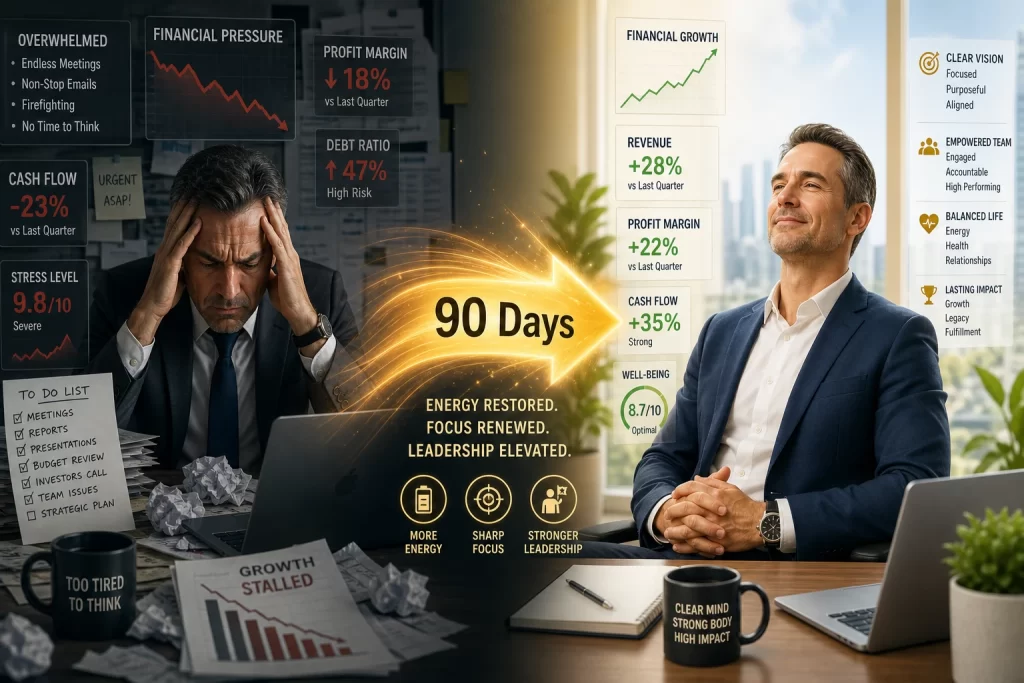
In practical terms, this means:
Identifying your specific depletion pattern. TCM pulse and tongue diagnosis, combined with a structured energy audit, reveals which organ systems are under load and how far the depletion has progressed. The Kidney-adrenal axis and Liver Qi stagnation patterns are the most common presentations in Singapore’s professional investor class.
Targeted acupuncture and herbal protocols. Not general wellness — precision interventions mapped to your current clinical picture. The Jassacu herbal collection includes formulas specifically designed for the adrenal-cortisol-sleep disruption triad that characterises financial and professional burnout.
Nervous system regulation practices. Evidence-based breathwork and Qi cultivation techniques that durably shift the autonomic nervous system from sympathetic dominance (chronic activation) to parasympathetic recovery — the state in which genuine restoration, clear thinking, and creative decision-making are possible.
Sustainable performance architecture. The same periodised recovery logic that elite athletes use to prevent overtraining, applied to the rhythms of a professional investor’s life. Strategic recovery is not a luxury. It is the precondition for compound performance.
When your biology is regulated, the quality of your investment decisions improves. Market volatility becomes less emotionally activating. The cognitive bandwidth required for good financial judgment is available because it is not being silently consumed by chronic low-grade stress response.
For executives and professionals already navigating burnout, see our detailed recovery framework: Holistic Burnout Recovery Strategies for Executives and Athletes.
The Singapore Context: Why This Matters More Here Than Almost Anywhere
Singapore’s particular combination of high cost of living, intense professional culture, and deep engagement with personal finance creates a specific pressure profile that is unlike most other cities.
The CPF system is genuinely well-designed — the existing structure provides stable, risk-free interest rates of up to 5% before age 55 and up to 6% per annum after age 55 — but it also means that every decision to invest CPF savings carries real stakes. This is retirement capital. The cognitive weight attached to these decisions is proportionate to what is at risk.
The new CPF investment scheme launching in 2028 is designed to cater to long-term investors who are willing to take some risk for potentially higher returns, but may have less expertise navigating the CPFIS offerings or prefer not to actively manage their investments — which is an implicit acknowledgement from the CPF Board itself that the cognitive demand of active investment management is a real barrier for many members.
The solution the Board is proposing is structural: simplify the product. The solution I am proposing is biological: restore the human making the decisions.
Both matter. Neither is sufficient without the other.
A Practical Self-Assessment: Are You Carrying More Than You Think?
These are the five signals I look for in a first clinical assessment with Singapore professional clients. They are not dramatic. They are quiet, accumulated, and easily normalised — which is precisely why they go unaddressed for so long.
- You check financial news or markets outside business hours — and it is not entirely voluntary. The habit has become compulsive, driven by a background anxiety rather than a genuine decision need.
- Your sleep is technically adequate but not restorative. You wake still tired, or wake in the early hours with the mind running.
- Weekends feel shorter than they used to. Not because you are doing more enjoyable things, but because recovery takes longer before you feel genuinely rested.
- You are irritable or impatient in ways that surprise you. Particularly with people closest to you. This is a Liver Qi stagnation signature in TCM — unexpressed stress pressure finding the path of least resistance.
- Your best ideas and clearest thinking happen less frequently. You are capable but not quite sharp. You are executing but not quite creating.
Three or more active? The cost is already accumulating. The good news is that the biological systems involved — adrenal, autonomic, hepatic in the TCM sense — respond well and quickly to targeted intervention.
What a 90-Day Protocol Looks Like for the Singapore Investor
The first step is always assessment, not prescription.
A complimentary 30-minute ROI Discovery Call with Jasmine Angelique covers:
- Your current stress and energy pattern (where the depletion is, and how far it has gone)
- The specific nervous system and organ system interventions most relevant to your presentation
- A 90-day sustainable performance protocol designed for your actual life — not a generic wellness plan
- How the biological work intersects with your professional and financial performance goals
This is available via telemedicine — no need to be in Barcelona or Lugano. Singapore clients are seen online with the same clinical rigour as in-person consultations.
Book your complimentary 30-minute Discovery Call →
For executives navigating the specific pressure profile of private equity, high-growth leadership, or portfolio company management, see also: CEO Alpha in Private Equity: Why GPs, Leadership Returns, and High-Performance Founders All Have a Burnout Problem.
Frequently Asked Questions
Is this relevant if I’m not in a clinical burnout state — just feeling stretched? This is actually the ideal point of intervention. TCM-informed integrative medicine is fundamentally preventive. The Kidney Qi depletion and Liver Qi stagnation patterns that precede burnout are identifiable and addressable long before they become a crisis. Most of my Singapore clients engage at the “stretched but functional” stage — which is when the ROI on intervention is highest.
Can I access these services from Singapore without travelling? Yes. Jasmine Angelique offers worldwide telemedicine consultations. Initial assessments, protocol design, coaching, and follow-up are all available remotely. Herbal protocols from the Jassacu collection can be discussed and arranged during consultation.
How quickly do results typically show? Most clients notice meaningful changes in sleep quality and cognitive sharpness within 4–6 weeks. The 12-week review typically shows measurable improvements in sustained energy, emotional regulation, and decision clarity.
Does this affect investment decision-making directly? Not by telling you what to invest in — but absolutely by restoring the biological substrate that makes good investment decisions possible. Regulated nervous system, lower cortisol baseline, better sleep, clearer cognition: these are the physiological preconditions for the kind of patient, clear-headed decision-making that long-term wealth building requires.
Is the session conducted in English? Yes. Jasmine is also fluent in Serbian, Italian, Spanish, and Bulgarian, with working German and French. Singapore sessions are conducted in English.
Jasmine Angelique is the founder of Energy Angel, creator of the APEX CODE Method™, and author of The Achievement Void and Medicina de Luz. She practises integrative TCM and executive wellness medicine across Barcelona, Lugano, Milan, London, Belgrade, and worldwide via telemedicine.