




Alzheimer Disease: The Hidden Trauma-Stress Link — Signs, Causes, and What Most Doctors Miss
By Jasmine Angelique — Energy Angel | TCM Practitioner, Naturopath & High-Performance Coach
Alzheimer disease is one of the most feared diagnoses of our time — and one of the least understood. Conventional medicine focuses on amyloid plaques and tau tangles. But forward-thinking researchers, naturopaths, and holistic practitioners are tracing a different thread: the chronic stress and unresolved trauma that appear to accelerate neurodegeneration long before any scan can detect it.
This article covers what Alzheimer’s is caused by, the 7 signs that appear earliest, how it differs from general dementia, what medicine currently offers, whether it can be reversed, and how holistic approaches — including diet, energy medicine, and trauma work — are changing the clinical conversation.
What Is Alzheimer Disease? Alzheimer vs Dementia — Understanding the Difference
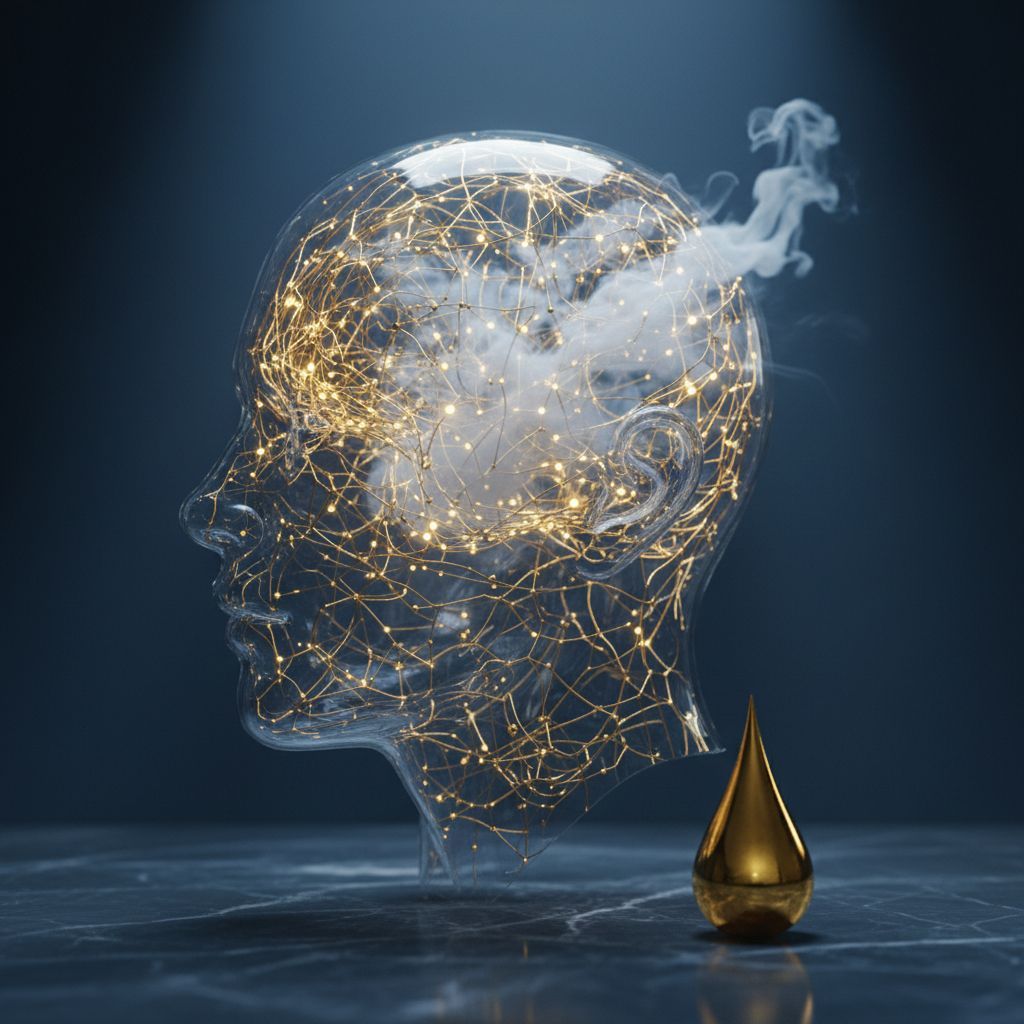
Alzheimer disease is the most common form of dementia, accounting for 60–80% of all cases. Dementia is the umbrella term for a group of symptoms affecting memory, reasoning, and daily function. Alzheimer’s is a specific, progressive brain disease — one cause among several that produce dementia.
Alzheimer vs dementia in practical terms:
- Dementia describes symptoms; Alzheimer disease is a diagnosis
- Other causes of dementia include vascular dementia, Lewy body dementia, and frontotemporal dementia
- Alzheimer’s has a specific biological signature: amyloid plaques, tau tangles, and progressive neuron loss
Understanding this distinction matters because treatment approaches — including both conventional alzheimer medicine and holistic support — differ depending on the underlying cause.
What Is Alzheimer’s Caused By? The Full Picture
The honest answer is that no single cause explains Alzheimer disease. Current research points to a convergence of factors:
Biological factors:
- Accumulation of amyloid-beta plaques and tau protein tangles
- Neuroinflammation and oxidative stress
- Mitochondrial dysfunction — impaired cellular energy production
- Insulin resistance in the brain (increasingly called “Type 3 Diabetes”)
- Genetic factors including the APOE4 gene variant
Lifestyle and metabolic factors:
- Chronic sleep deprivation
- Sedentary lifestyle
- Ultra-processed diet and blood sugar dysregulation
- Cardiovascular risk factors (hypertension, obesity, smoking)
The factor most often ignored: chronic stress and unresolved trauma.
Studies consistently show that individuals with PTSD face approximately 1.6–2 times higher risk of developing Alzheimer’s and other dementias. The mechanisms are measurable: prolonged cortisol elevation damages the hippocampus — the brain’s memory centre — directly. Chronic neuroinflammation accelerates brain aging. Trauma disrupts metabolic and vascular health at a systemic level.
In holistic and naturopathic frameworks, Alzheimer’s is sometimes understood as the brain’s protective response: a way to “forget” overwhelming pain — personal or inherited through family systems. Family Constellations practitioners observe patterns of intergenerational trauma manifesting in cognitive decline, and report that addressing these dynamics can bring measurable emotional relief, reduced agitation, and improved relational quality even when neurodegeneration is advanced.

Can Alzheimer Happen at Any Age?
Yes — though it is far more common after 65, Alzheimer disease can happen at any age. Early-onset Alzheimer’s, defined as symptoms appearing before age 65, affects an estimated 5–6% of all Alzheimer’s patients. Cases have been documented in people in their 40s and even 30s, though these are rare and often linked to genetic mutations (particularly in the PSEN1, PSEN2, or APP genes).
Age remains the single largest risk factor. The probability roughly doubles every five years after 65. By age 85, close to one in three people shows some form of cognitive impairment.

What Are the 7 Signs of Alzheimer’s?
Early recognition is critical — both for access to alzheimer medicine and for implementing lifestyle and holistic interventions that may slow progression. The 7 signs of Alzheimer’s most commonly cited by neurologists and the Alzheimer’s Association are:
- Memory loss that disrupts daily life — forgetting recently learned information, important dates, or repeatedly asking for the same information
- Difficulty with problem-solving or planning — trouble following familiar recipes, managing bills, or concentrating on multi-step tasks
- Difficulty completing familiar tasks — getting lost driving a familiar route, forgetting the rules of a favourite game
- Confusion with time or place — losing track of dates, seasons, the passage of time, or how they arrived somewhere
- Vision problems and spatial difficulties — trouble reading, judging distance, determining colour or contrast
- New problems with words — stopping mid-sentence, struggling to find the right word, repeating themselves, or calling things by the wrong name
- Poor judgment and withdrawal — unusual decisions around money, decreased hygiene, withdrawing from social activities
Early-stage changes are often subtle. An alzheimer test 12 questions format (such as the SAGE test or MMSE) is commonly used by practitioners to screen for cognitive changes — these can be taken at home or administered by a GP as an initial assessment before specialist referral.
Can Alzheimer Kill?
Yes. Alzheimer disease is a terminal condition. It is the sixth leading cause of death in the United States and among the top ten globally. Death is rarely from the disease process alone — advanced Alzheimer’s leaves the body vulnerable to pneumonia, infections, and complications from immobility, swallowing difficulties, and malnutrition. Most people live 4–8 years after diagnosis, though survival can range from 3 to 20 years depending on age at diagnosis and overall health.
This is why both family support and professional care planning — including knowing where to find professional in-home care services for someone with advanced cognitive decline — matter so profoundly, and so early.
Can Alzheimer Be Reversed?
This is one of the most searched questions in the field — and the answer is nuanced.
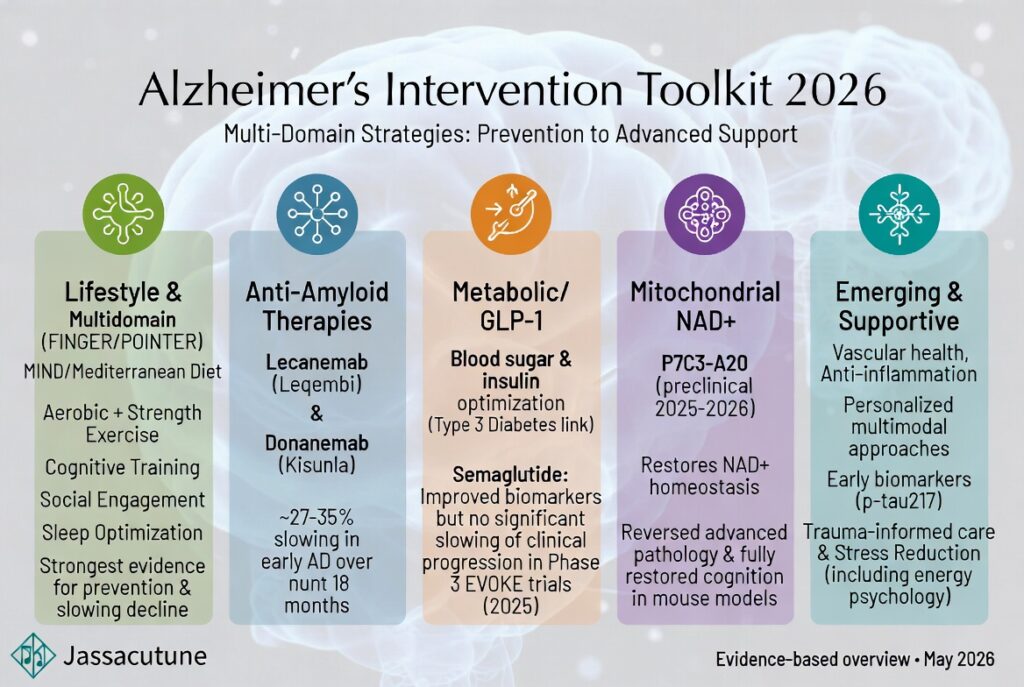
Conventional medicine does not claim to reverse Alzheimer disease. The two most recently approved drugs, lecanemab (Leqembi) and donanemab (Kisunla), clear amyloid plaques and show modest slowing of decline in early-stage patients. They do not restore lost function.
However, several functional medicine and research frameworks do report meaningful cognitive improvements — particularly in early and mild-moderate stages — using multidomain interventions:
- The Bredesen Protocol (ReCODE) has reported reversal of cognitive decline in early Alzheimer’s using combinations of diet, sleep optimization, exercise, stress reduction, and targeted supplementation. Some patients with confirmed MCI (mild cognitive impairment) showed sustained improvement over years.
- FINGER trial and POINTER study data support that multidomain lifestyle interventions can meaningfully slow or prevent cognitive decline in high-risk populations.
- Metabolic approaches targeting insulin resistance, inflammation, and mitochondrial function show measurable biomarker improvements.
The honest position: reversal of established Alzheimer disease is not proven at scale. Prevention of progression and improvement in early-stage cases — particularly through comprehensive lifestyle and holistic approaches — is increasingly supported by evidence.
Alzheimer Medicine: What’s Currently Available
Approved pharmaceutical options (2026):
- Lecanemab (Leqembi) — anti-amyloid monoclonal antibody; slows decline in early Alzheimer’s
- Donanemab (Kisunla) — similar mechanism; approved for early symptomatic Alzheimer’s
- Cholinesterase inhibitors (donepezil, rivastigmine, galantamine) — symptom management, not disease-modifying
- Memantine — for moderate-to-severe stages; slows some symptom progression
GLP-1 agonists (semaglutide, liraglutide) show mixed results for treatment but meaningful potential in prevention, particularly through metabolic and vascular pathways.
Emerging research:
- Mitochondrial restoration compounds (P7C3-A20) restored energy production and improved cognition in advanced animal models — human trials are ongoing
- NAD+ precursors (NMN, NR) — widely used in prevention protocols; mechanisms plausible, human trial data still maturing
What Are the Top-Rated Supplements Marketed for Alzheimer’s Support?
These are the supplements most commonly encountered in clinical and functional medicine contexts. None are approved treatments for Alzheimer disease, but several have plausible mechanisms and some clinical evidence:
- Lion’s Mane mushroom (Hericium erinaceus) — stimulates nerve growth factor (NGF); the most cited in cognitive support protocols
- Omega-3 fatty acids (DHA/EPA) — anti-inflammatory; supports neuronal membrane integrity
- Phosphatidylserine — phospholipid supporting neuronal communication; longest track record in cognitive supplements
- Bacopa monnieri — adaptogenic herb with memory-supporting evidence in multiple human trials
- Curcumin (high-bioavailability form) — anti-inflammatory and anti-amyloid properties; absorption is the critical variable
- Vitamin D3 + K2 — deficiency strongly associated with cognitive decline; common in northern and indoor populations
- Magnesium L-threonate — specifically crosses the blood-brain barrier; emerging data on synaptic density
- NAD+ precursors (NMN/NR) — mitochondrial support; widely used in anti-aging and cognitive longevity protocols
- B vitamins (B6, B9, B12) — elevated homocysteine is a known dementia risk factor; B-complex supplementation reduces it
Always consult a qualified practitioner before beginning a supplement protocol, particularly if pharmaceutical medications are in use.
What Are the Best Apps for Tracking Alzheimer’s Symptoms?
For families and caregivers managing a loved one’s cognitive decline, several digital tools offer structured tracking:
- Dementia Care Together — carer support, symptom logging, resource library
- CareZone — medication management, health notes, and appointment tracking; widely used for complex care situations
- Alzheimer’s Research UK’s Carer’s Handbook app — UK-based but internationally accessible; daily guidance and symptom tracking
- MyndYou — AI-powered cognitive monitoring through phone calls; designed for remote and telehealth integration
- Medisafe — medication tracking and reminders; essential for multi-drug regimens in Alzheimer’s care
- SAGE (Self-Administered Gerocognitive Exam) — not an app, but a validated 12-question paper test available free from The Ohio State University; often used as an at-home alzheimer test before clinical assessment
Powerful Dietary Strategies: Feeding the Brain
Clients benefit most from nutrient-dense, anti-inflammatory food choices that directly support brain tissue, reduce neuroinflammation, and stabilize blood sugar — all identified risk pathways in Alzheimer disease.
Brain-supporting foods to prioritize:
- Wild-caught fatty fish (salmon, sardines, mackerel) — highest bioavailable DHA
- Extra virgin olive oil (high-polyphenol, cold-pressed)
- Berries — particularly blueberries and blackcurrants for anthocyanin content
- Leafy greens — spinach, kale, chard; high in folate, vitamin K, and antioxidants
- Avocados, eggs, nuts, and seeds
- Turmeric with black pepper — for curcumin bioavailability
- Coconut oil — medium-chain triglycerides as alternative brain fuel
Foods to minimize or eliminate:
- Ultra-processed foods and refined sugars
- Refined seed oils
- Gluten and dairy for individuals with sensitivity or autoimmune markers
- Alcohol — increasingly linked to accelerated brain aging
The gut-brain axis matters significantly. Probiotic-rich foods, diverse fiber intake, and eliminating inflammatory triggers support the microbiome-cognition link now established in the neurological literature.
Energy, Beliefs & Cellular Science
Cellular biologist Dr. Bruce Lipton’s work on the biology of belief highlights that perceptions, emotional states, and energy fields influence gene expression beyond fixed DNA. While mainstream science continues to debate interpretations, the clinical observation holds: sustained stress and fear-based emotional states keep the body in physiological survival mode — and that has measurable neurological consequences.
Practices that address subconscious programming, shift the nervous system from chronic activation, and restore coherence at an energetic level include:
- EFT (Emotional Freedom Technique / Tapping)
- Healing Touch and Therapeutic Touch
- Family Constellations for intergenerational trauma patterns
- Somatic therapies
- Quantum and energy-based healing modalities
These approaches do not replace conventional alzheimer medicine. They address layers of the condition that conventional medicine does not yet have tools to reach.
Alzheimer How to Deal as a Family Member
The diagnosis affects not just the person — it reorganises the entire family system. Practical and emotional guidance:
Early stage:
- Involve the person with Alzheimer’s in care planning while they can still participate in decisions
- Get legal documents in order: power of attorney, advance directives, financial planning
- Begin researching local and remote care options — do this before crisis, not during it
- Find your local Alzheimer’s association chapter for carer support groups
Mid-stage:
- Establish predictable daily routines — structure reduces agitation
- Communicate with short, direct sentences; avoid quizzing on memory
- Manage your own stress — caregiver burnout is not a metaphor; it is a clinical risk
- Explore professional in-home care services for someone with advanced cognitive decline before they become urgently necessary
Advanced stage:
- Palliative and memory care planning becomes central
- Grief is present long before death — this is called “ambiguous loss” and it is real and valid
- Professional support for carers is not optional; it is essential
For those asking where to find memory care facilities specializing in Alzheimer’s near you: the Alzheimer’s Association (alz.org) and national equivalents in Europe offer searchable directories of local memory care facilities, in-home care services, and respite care options. A GP or neurologist referral is typically the first step to formal assessment and access to funded care.
The Comprehensive Toolkit (2026 View)
Lifestyle and metabolic optimization: Multidomain programs, aerobic and resistance exercise, quality sleep, cognitive and social engagement, blood sugar management
Conventional alzheimer medicine: Lecanemab, donanemab, cholinesterase inhibitors, memantine — matched to disease stage
Nutritional approaches: Anti-inflammatory, real-food diet; targeted supplementation; gut-brain axis support
Trauma, stress and energy medicine: Trauma-informed therapy, somatic practices, EFT, Family Constellations, Healing Touch, subconscious reprogramming
Digital tools: Apps for symptom tracking, medication management, and carer support
Alzheimer disease is not a single story. It has biological, metabolic, emotional, energetic, and ancestral dimensions — and addressing it comprehensively means moving beyond the prescription pad into the full territory of what it means to be a human brain in a human body carrying a human life.
Your brain is listening to what you feed it, how you sleep, what you carry, and what you refuse to release. Prevention begins now — not when symptoms appear.
Ready to explore a personalised brain health and stress resilience protocol?
Distance sessions available worldwide via Telemedicine.
Jasmine Angelique | Energy Angel | medicinacinese.ch