


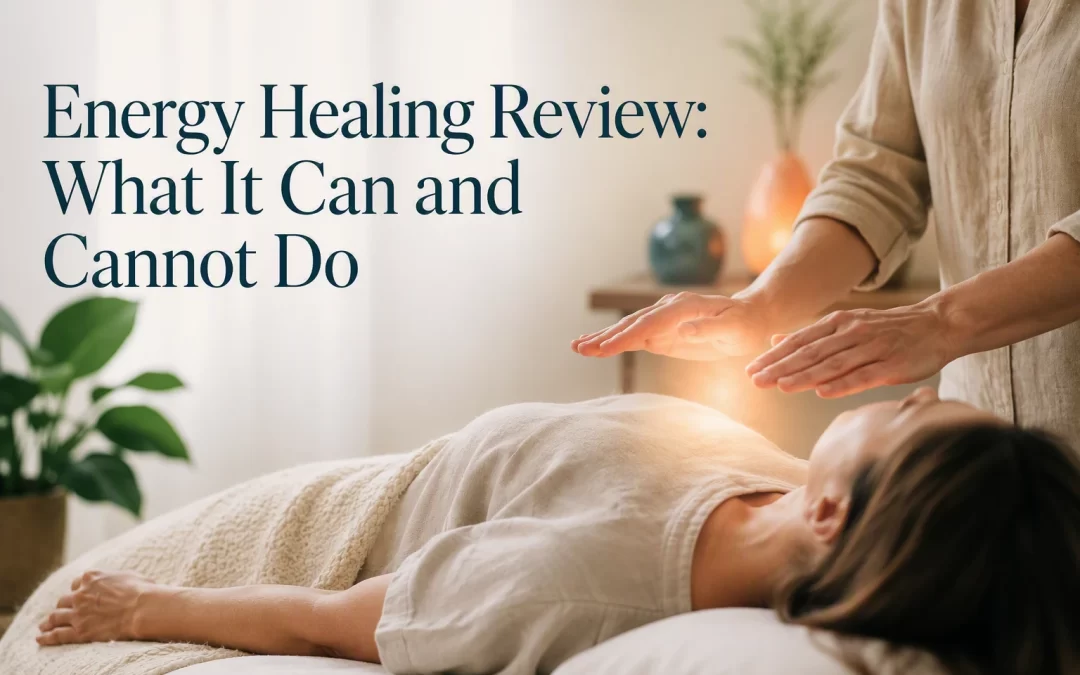
If you are weighing energy healing for burnout, lasting pain, or recovery, the real question is whether it helps beyond rest, focused attention, hope, or usual care. This energy healing review separates personal reports from controlled research. It explains where benefits may be plausible, where claims go too far, and how to choose safely. This energy healing review uses a practical, evidence-led lens. Read this energy healing review before replacing medical care.
What the Evidence Actually Shows
Short-Term Symptoms Versus Treating an Illness
A calming session may help you feel less tense, sleep better, or cope with pain for a short time. That experience is real, but it does not prove an illness has been treated.
| Claim | What evidence supports |
|---|---|
| Feeling calmer after a session | A possible short-term wellbeing effect |
| Curing cancer, infection, or diabetes | No reliable evidence |
| Replacing medical care | Not safe or supported |

Use energy healing as support, not as a substitute for diagnosis, medicines, or urgent care.
Why the Research Remains Uncertain
Studies of Reiki and related practices are often small and use different session styles, outcomes, and comparison groups. This makes results hard to compare. The NCCIH review of Reiki finds inconsistent, mostly low-quality research and no clear proof it works for any health condition.
- Expectation and focused care can affect symptom reports.
- There is no scientific evidence for the proposed energy field.
- Stronger, well-controlled trials are still needed.
Also Read: Acupuncture vs Energy Healing: Key Differences Explained
What Energy Healing May and Cannot Do
Possible Uses as Complementary Support
Energy healing may help some people slow down, feel cared for, and create a calming routine. Use it alongside proven care for:
- stress or burnout
- sleep and relaxation
- coping with ongoing pain
- general wellbeing
A calm session can support your own self-care, but results vary. Some mind-body approaches, including acupuncture and relaxation practices, may help manage certain pain conditions, according to NCCIH guidance.

Claims That Go Beyond the Evidence
Reiki and similar energy healing methods have not been clearly shown to treat any health condition. The NCCIH review of Reiki finds inconsistent, low-quality research and no scientific proof of the proposed energy field.
| Claim | Evidence-based view |
|---|---|
| Supports relaxation | Possible personal benefit |
| Cures cancer or infection | Not supported |
| Replaces medical care | Unsafe choice |
Do not delay a medical assessment for severe pain, chest symptoms, fever, or worsening mental health.
Also Read: Natural Medicine in Lugano vs Conventional Care: Which Path Suits You?
Safety, Practitioner Quality, and How to Try It Responsibly
Red Flags Before Booking
Choose a session as support for wellbeing, not as a replacement for medical care. The NCCIH advises discussing complementary care with your health provider and not delaying proven treatment.
Watch for these red flags:
- Claims to cure cancer, infections, or mental health conditions.
- Pressure to stop medicines or avoid your doctor.
- No clear training, fees, consent process, or privacy policy.
- Fear-based sales tactics or demands for large upfront payments.
Ask about training, experience, boundaries, and when they refer clients onward. A good practitioner welcomes these questions and works alongside your care team.
Stop and seek medical help for new chest pain, fainting, severe symptoms, or thoughts of self-harm.
Also Read: Quantum Energy Healing: A Review for Wellness Seekers
Is Energy Healing Worth Trying?
It may be worth a low-risk trial if you want calm, rest, or support alongside standard care. Reiki has not been clearly shown to treat any health condition, according to NCCIH’s review.
| Good reason to try | Not a good reason |
|---|---|
| You want a relaxing self-care session | You plan to replace medical care |
| You track symptoms and costs | You expect a cure |
- Set one goal, such as better sleep.
- Try a short course.
- Stop if it adds pressure or expense.
Seek medical advice promptly for new, severe, or worsening symptoms.
Ready for a careful, personalized approach? Medicina Cinese offers energy therapies and integrative support for stress, recovery, and wellbeing.
Frequently Asked Questions
Q1: Provide a balanced review of energy healing with clear expectations for readers.
Energy healing may support calm, comfort, and self-care. It has not been shown to cure disease, replace medical treatment, or explain serious symptoms.
Q2: Is energy healing safe alongside medical care?
Usually, yes, if it is gentle and does not delay care. Tell your clinician about all therapies, especially for ongoing pain or mental health concerns.
Q3: When should I seek medical help instead?
Seek prompt care for chest pain, breathing trouble, sudden weakness, fever, severe pain, or worsening symptoms.
Conclusion
Energy healing may support relaxation and comfort, but it cannot replace medical care or cure disease. NCCIH finds Reiki evidence inconsistent. Choose qualified care, keep expectations realistic, and seek medical advice for persistent symptoms.