


Quick Summary: Tai Chi and TCM may ease stress, anxiety, low mood, and fatigue, but they are not a cure for burnout, which the WHO defines as unmanaged chronic work stress. The evidence is mixed, so treat them as supportive habits, not replacements for medical checks, especially for persistent fatigue or sleep issues. Start with a clinician assessment, then try small Tai Chi sessions (10 minutes, three times a week) and tailored TCM care like acupuncture or herbs, but always review medications and stop if symptoms spike. Recovery also requires reducing workplace pressure and restoring routines, not just boosting energy.
Research from 2025 and 2026 suggests Tai Chi and TCM may ease stress, anxiety, low mood, and fatigue. They are not a cure for burnout. The WHO defines burnout as unmanaged chronic work stress. Burnout symptoms can also signal illness, poor sleep, or depression. This guide reviews burnout recovery, tai chi energy, and TCM for fatigue safely, alongside medical care and workplace change.
What Current Research Says About Tai Chi and TCM for Burnout
Tai Chi May Support Stress, Mood, and Sleep-Related Recovery
Tai Chi combines slow movement, breath, and attention. Research suggests it may support sleep quality and mood, both often affected by burnout. The U.S. NCCIH says Tai Chi may improve sleep quality, though it may not treat insomnia itself. It may also reduce anxiety, but results vary across studies. NCCIH’s review reflects this cautious view.
Why the Evidence Does Not Prove a Cure
Burnout is not one single disease, and studies often measure stress, sleep, or mood rather than burnout directly. TCM treatments, including acupuncture and herbs, need stronger, larger trials for firm claims.
- Treat Tai Chi as a supportive habit, not a cure.
- Check persistent fatigue with a doctor.
- Discuss herbs and medicines with a qualified clinician.
Key point: CBT-I remains the strongest recommended treatment for chronic insomnia, according to NCCIH.
Also Read: Acupuncture vs Herbal Medicine: Which Fits Your Symptoms?
How TCM Approaches Burnout and Persistent Fatigue
Acupuncture, Acupressure, and Herbal Support
TCM care aims to ease symptoms while supporting sleep, stress control, and daily function. A clinician may use acupuncture, acupressure, movement, food advice, and tailored herbs.
- Acupuncture uses fine needles at set points.
- Acupressure uses firm touch and can support home routines.
- Herbs need a full medication review.
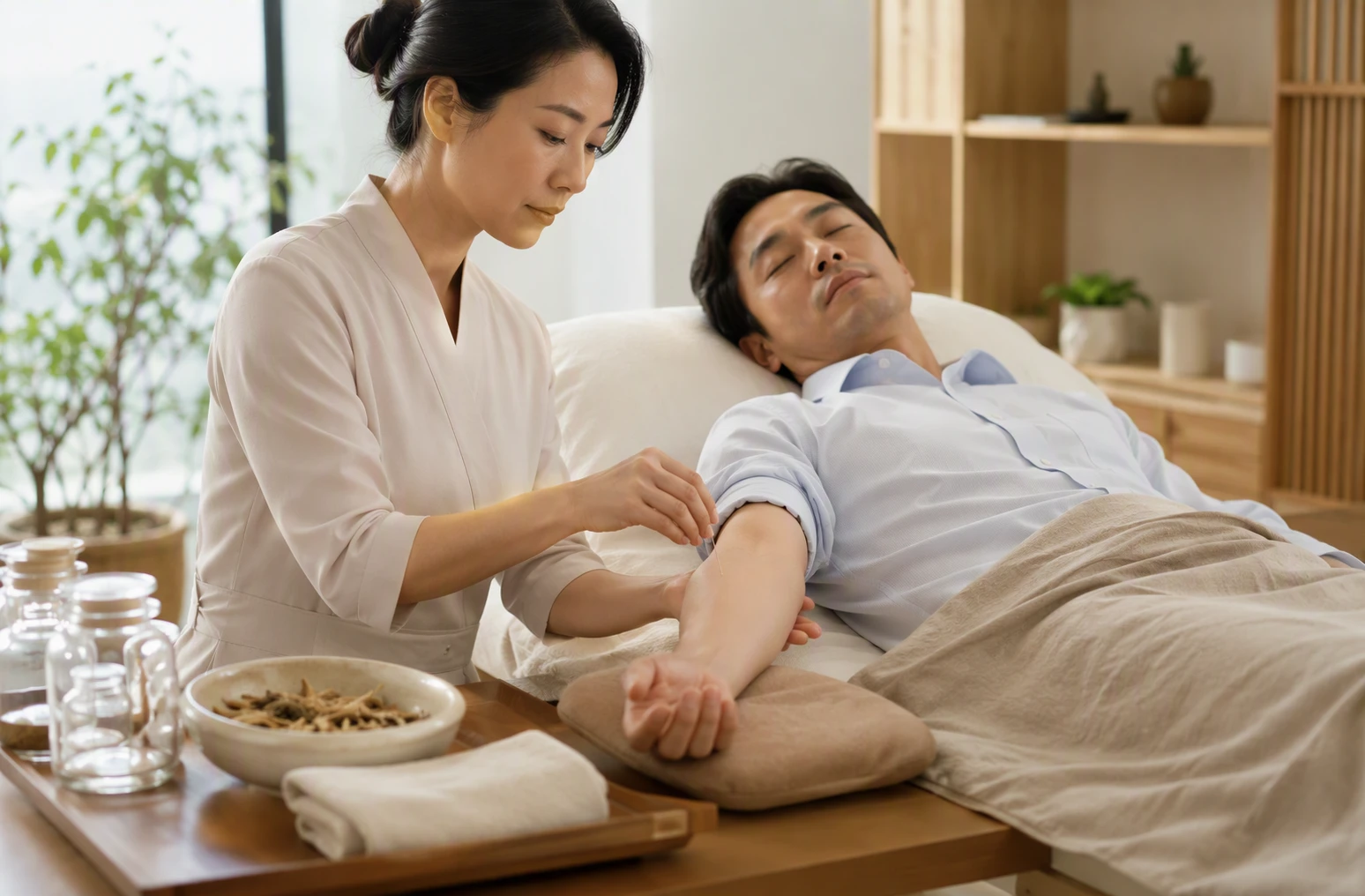
Evidence for Chinese herbal products is mixed, and product quality can vary, notes NCCIH’s TCM guidance.
Do not use TCM to delay a medical check for persistent fatigue, low mood, or sleep problems.
The TCM Concept of Qi and Energy
In TCM, qi describes vital energy and its movement through the body. Fatigue may be framed as depleted or blocked qi, then assessed alongside sleep, digestion, mood, and pain.
This is a traditional model, not a medical diagnosis. Research does not confirm qi as a measurable body substance. Acupuncture is generally safe with trained care and sterile needles, but it still carries risks if poorly delivered, according to NCCIH.
Also Read: Acupuncture in Lugano: Benefits, Costs, and Sessions Explained
Building a Safer Burnout Recovery Plan
Start With Assessment, Not Supplements
Persistent fatigue needs a health check before a wellness plan. Ask a clinician to review sleep, mood, workload, medicines, and possible medical causes.
- Share every herb and supplement you use.
- Seek urgent help for chest pain, fainting, or thoughts of self-harm.
“Natural” does not always mean safe. Chinese herbal products can interact with drugs or contain harmful contaminants, notes the NCCIH guide to TCM.

Use Tai Chi as a Measurable, Low-Pressure Practice
Start small: try 10 gentle minutes, three times a week. Track sleep, energy, mood, and pain for four weeks. Tai Chi combines slow movement, breathing, and focus, and is generally safe, though some postures need adapting for injuries or osteoporosis, according to NCCIH.
- Choose a beginner class or seated version.
- Stop if pain, dizziness, or fatigue spikes.
- Review progress with your clinician.
Also Read: Traditional Chinese Medicine in 2026: What Recent Research Says
Why Burnout Recovery Requires More Than Energy Restoration
More sleep or a short break may ease fatigue, but burnout also affects how you feel about work and your ability to function. The World Health Organization describes three parts: exhaustion, distance or cynicism, and reduced work effectiveness.
Recovery needs more than a quick energy boost:
- Reduce the pressure that keeps draining you.
- Restore routines for sleep, food, movement, and connection.
- Check your health for causes of ongoing fatigue.
Persistent low mood, panic, or thoughts of self-harm need prompt support from a qualified health professional.
Feeling drained? Medicina Cinese offers tailored TCM support, acupuncture, herbs, and coaching to help restore steady energy.
Frequently Asked Questions
Q1: How can traditional Chinese medicine help with burnout recovery?
TCM may support sleep, stress relief, and daily energy through tailored acupuncture, herbs, food advice, and gentle movement. It should complement, not replace, medical checks for fatigue.
Q2: Can Tai Chi help with burnout recovery?
Yes. Slow Tai Chi practice may calm the nervous system, improve balance, and create a steady routine without intense effort.
Q3: How does traditional Chinese medicine treat burnout?
A qualified practitioner reviews sleep, mood, digestion, workload, medicines, and health history before making an individual plan.
Q4: What are the best TCM herbs for energy restoration?
There is no single best herb. Herbal formulas must fit your symptoms and avoid drug interactions, especially with blood thinners or antidepressants.
Conclusion
Tai Chi may support sleep, mood, and gentle movement, while TCM needs safe, tailored use. NCCIH advises medical assessment and coordinated care for persistent fatigue.