


'/%3E%3C/svg%3E)

'/%3E%3Cpath%20fill='%23b2b2b2'%20d='M241%20382q0%2016%2017%2026%2017%2011%2042%2011t42-11q16-11%2017-26V269H241'/%3E%3Cpath%20fill='%239f7e00'%20d='M241%20379q0%2014%208%2023%209%209%2021%209%2014%200%2021-9%209-9%209-23V269h-59'/%3E%3Cpath%20d='M241%20339v-70h59v110q0%2014-9%2023l-6%205v-68h-15v72q-8%200-14-4v-68zm59%2040c0%2022%2015%2032%2029%2032%2021%200%2030-18%2030-32v-40h-59'/%3E%3Cpath%20fill='%239f7e00'%20d='M266%20277v5h2v12h-3v-5h2v-5h-9v5h2v5h-4v9h3v18h-5v10h34v-10h-5v-18h3v-9h-4v-5h2v-5h-9v5h2v5h-3v-12h2v-5zm42%20101q0%2010%206%2017%206%206%2015%207%2010-1%2016-7%206-7%206-17v-29h-43'/%3E%3Ccircle%20fill='%230044ad'%20cx='329.5'%20cy='372'%20r='6'/%3E%3Cellipse%20fill='%230044ad'%20cx='300'%20cy='340'%20rx='16'%20ry='21'/%3E%3C/svg%3E)


'/%3E%3C/svg%3E)


Quick Summary: Acupuncture provides quick relief for pain, stress, and sleep issues, making it ideal for urgent symptoms. Herbal medicine offers steady, long-term support for ongoing patterns like fatigue and digestion problems. Many people benefit from combining both, depending on their specific symptoms and safety considerations.
Need relief fast, or support that lasts between visits? In acupuncture vs herbal medicine, acupuncture often helps stress, pain, burnout, and poor sleep sooner, while herbs give steadier day-to-day support. Many people need both. This acupuncture vs herbal medicine guide covers speed, symptom fit, lifestyle, and safety. In clinic practice, acupuncture vs herbal medicine is rarely a simple either-or choice.
Acupuncture vs Herbal Medicine: At a Glance
| Acupuncture | Herbal Medicine | |
|---|---|---|
| Best for | Pain, stress, sleep, burnout | Chronic patterns, ongoing support |
| Speed of effect | Often fast, sometimes same-day | Usually gradual |
| Treatment format | In-clinic sessions | Custom formulas, taken regularly |
| Safety considerations | Low risk when properly performed | Check interactions and quality |
| Ideal use case | Short-term regulation and relief | Steady background support |
How Acupuncture and Herbal Medicine Compare
Acupuncture
Acupuncture uses thin needles to ease pain, calm stress, and help sleep by supporting nervous system balance. It suits people who want hands-on care and often want relief fast, especially for pain, tension, or burnout.

Herbal Medicine
Herbal medicine uses custom Chinese formulas matched to your pattern and taken over time. It fits people who need steady support between visits, especially for longer-lasting issues or symptoms that keep coming back.
How Quickly Each One Fits Your Symptom Pattern
When rapid relief matters most
If you want help fast, acupuncture usually fits better. It is most often used for pain, and research from NCCIH on acupuncture says it may help several pain problems, including back, neck, knee, and postsurgical pain. That makes it a stronger first pick for:
- sudden pain flares
- tension headaches
- stress with tight shoulders
- poor sleep linked to physical tension
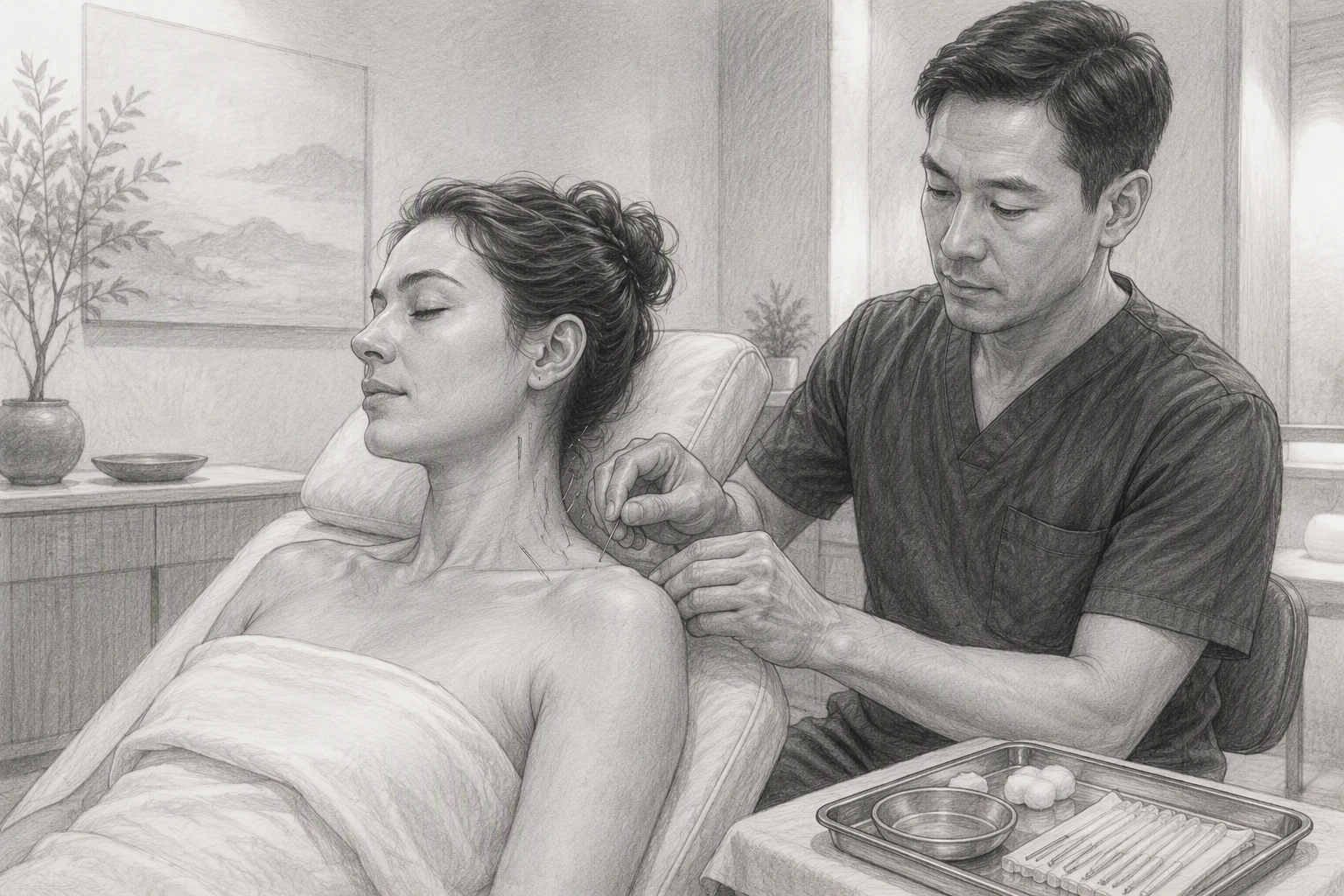
If your symptom feels sharp, stuck, or urgent, acupuncture often gives the quicker signal.
When steadier support is the priority
Chinese herbs usually fit better when your pattern builds over time and keeps coming back. NCCIH on traditional Chinese medicine notes mixed evidence for herbal products, so quality and supervision matter. Herbs may suit:
- burnout with fatigue
- stress with digestion changes
- sleep trouble that repeats
- recovery after overtraining
Also Read: Acupuncture vs Herbal Prescriptions: Which Fits Your Symptoms?
Safety, Convenience, and Medication Fit
If you take daily meds, acupuncture is often simpler. Herbal formulas need extra screening. The FDA warns some supplements can change how medicines work, and NCCIH notes contamination, hidden drugs, and herb-drug risks in some products FDA safety warning and NCCIH herb-drug guidance.
Tell your practitioner about blood thinners, antidepressants, fertility drugs, diabetes meds, and supplements before starting herbs.
Busy week? Acupuncture needs travel and appointment time, but adherence is easy once booked. Herbs fit home life better, yet only if you remember doses and reorders.
- Choose acupuncture if you want low daily effort.
- Choose herbs if you can follow a routine.
- Choose both if symptoms are mixed and your medication list has been checked carefully.
Also Read: Top 7 Natural Medicine Options in Lugano for Everyday Care
Which Should You Choose: Acupuncture or Herbal Medicine?
Pick based on the symptom pattern, speed you need, and your comfort level. NCCIH notes that acupuncture may help several pain conditions, while it also says evidence for Chinese herbal products is more mixed and safety depends on product quality.
- Choose acupuncture if…
- You want faster help for pain, tension, headaches, or stress.
- Your symptoms feel tight, sharp, stuck, or flare with movement.
- You prefer a hands-on treatment and fewer daily tasks.

- Choose herbal medicine if…
- Your issue is ongoing, comes in cycles, or affects sleep, digestion, energy, or burnout.
- You want support between visits.
- You are fine taking a tailored formula daily.
Tell your doctor about any herbs, especially if you take medicines.
- Choose both if…
- You have mixed symptoms, like pain plus poor sleep, stress plus fatigue, or burnout with digestion issues.
- Acupuncture can calm the body now. Herbs can support steadier change between sessions.

Still unsure which fits your symptoms? Book a personalized plan with Medicina Cinese for acupuncture, herbs, or both.
Frequently Asked Questions
Q1: Compare two core Chinese medicine approaches so readers can decide which fits their needs.
Acupuncture often suits pain, tension, and fast symptom relief. Herbal medicine may fit sleep, digestion, hormones, and longer patterns. Many people do best with both.
Q2: How fast do acupuncture and herbs work?
Acupuncture may help after 1 to 3 visits for pain or stress. Herbs often need days or weeks. Acute issues move faster than burnout.
Q3: Can I use both together?
Yes. This combo is common when symptoms overlap, like stress plus poor sleep. A qualified practitioner should match timing, dose, and goals.
Conclusion
Choose acupuncture first for pain and faster symptom relief. Pick herbal medicine for broader internal patterns. Combine both when symptoms overlap. NCCIH notes acupuncture may help some pain conditions, while herbal evidence is mixed and safety checks matter.