




Quick Summary: Joseph Lister introduced antiseptic surgery in the 1860s using carbolic acid to kill germs, dramatically reducing post-operative infections. His method evolved into modern aseptic practice, which focuses on preventing microbes from reaching wounds through sterilization and clean techniques.
In the 1860s, a Glasgow compound fracture could survive surgery yet end in fatal infection. Joseph Lister began using disinfectants and antiseptics during surgery, with carbolic acid surgery at the core. This guide traces Joseph Lister antiseptics, the Lister antiseptic technique, and antiseptic surgery history. It explains why surgeons began using disinfectants and antiseptics during surgery, then how the method led toward modern sterile practice.
Who Introduced Antiseptics in Surgery?
The Direct Answer
Joseph Lister introduced the first widely adopted antiseptic system in surgery. In the 1860s, he began using disinfectants and antiseptics during surgery, chiefly carbolic acid, to kill germs around wounds. His landmark paper appeared in 1867 in the British Medical Journal.
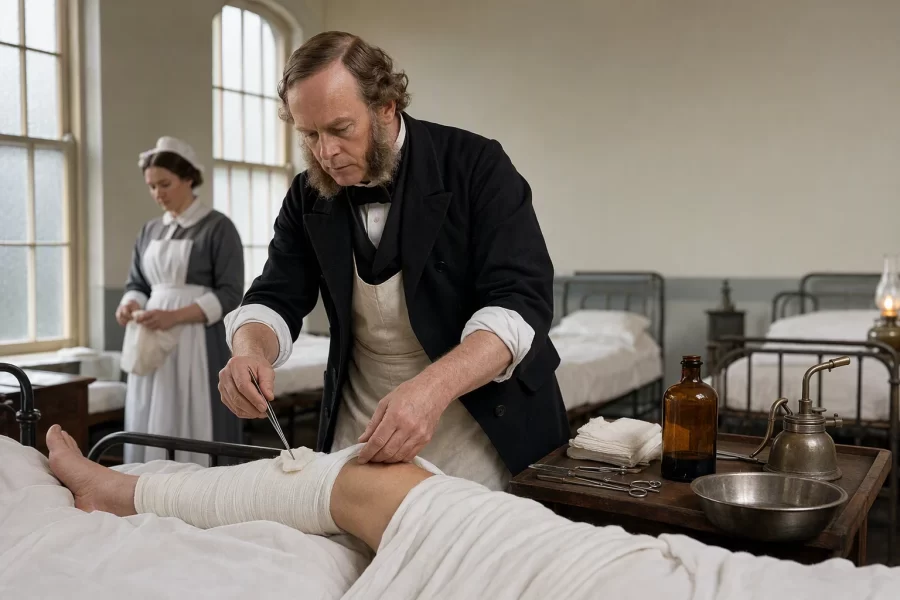
Why Surgery Needed a New Approach
Before Lister, surgeons often reused unwashed tools and coats. Many patients developed sepsis, gangrene, or fatal infections after an operation.
- Pasteur’s germ research shaped Lister’s thinking.
- Lister began using disinfectants and antiseptics during surgery to protect wounds.
- His work made infection control a core part of surgical care.
Lister’s chemicals were harsh by modern standards, but his central idea changed medicine.
How Germ Theory Led Lister to Carbolic Acid
Pasteur’s Influence on Lister
Louis Pasteur showed that tiny living organisms caused fermentation and decay. Lister applied that idea to infected wounds: germs from the air and surroundings, not air itself, caused putrefaction. A medical history review notes that this link reshaped his approach to surgical infection.

Why Lister Chose Carbolic Acid
Lister learned that carbolic acid had helped control sewage odours in Carlisle. He chose it because it could kill germs on contact, then used it on wounds, dressings, hands, and tools. His system sought to block germ entry before infection began, as the Science Museum explains.
Carbolic acid was harsh and toxic. Modern surgery relies on safer aseptic methods.
What Was Lister’s Antiseptic System?
Lister built a full infection-control routine around carbolic acid, also called phenol. His aim was simple: kill germs before they reached an open wound.
Treating Wounds, Dressings, and Sutures
Lister cleaned wounds with carbolic acid and covered them with treated dressings. He also used antiseptic sutures and drainage methods to limit trapped fluid. His approach drew on germ theory and sought to stop wound decay, not merely hide its signs, as described by the Science Museum.
Carbolic acid could harm skin and tissue, so it was not a risk-free cure.
Cleaning Hands, Instruments, and the Operating Area
The system also reached beyond the wound. Staff washed hands with weak carbolic solution, and instruments soaked in carbolic baths. Lister even sprayed carbolic mist near the patient, though later practice dropped this harsh method. A medical history review notes that he treated hands, instruments, skin, and sutures as possible sources of infection in this account.
How Antiseptics Changed Surgery and Became Standard
From Controversial Method to Surgical Principle
Lister’s method faced real doubt, especially in Britain, where surgeons resisted its complex steps. Debate lasted for more than a decade, not because infection control was unimportant, but because evidence and practice were still changing. Historical research shows that acceptance varied by country and hospital.
The lasting shift was simple: wound infection became something surgeons could prevent, not merely endure.
Lister’s Legacy in Modern Surgery
Antisepsis led to asepsis: stopping microbes from reaching a wound in the first place. Steam sterilisation, clean instruments, hand hygiene, gowns, and controlled operating rooms grew from that principle. Chemical sprays faded, but Lister’s core idea remained. A medical history review notes that the antiseptic-to-aseptic change was shaped by bacteriology and concerns about chemical toxicity.

Explore whole-person care alongside modern medicine with Medicina Cinese. Book personalised support for wellbeing, recovery, and balance.
Frequently Asked Questions
Q1: Who introduced antiseptics in surgery?
Joseph Lister introduced the first practical antiseptic surgical system in the 1860s. He used carbolic acid to kill germs on wounds, instruments, dressings, and surgeons’ hands.
Q2: What was Joseph Lister’s contribution to antiseptic surgery?
Lister linked Pasteur’s germ theory to hospital care. His method sharply reduced wound infection and deaths after surgery.
Q3: How did antiseptics change surgical practices?
Surgeons began cleaning hands, tools, wounds, and dressings. Operations became safer, allowing doctors to attempt more complex procedures.
Q4: When did antiseptic surgery become standard?
Acceptance grew from the 1870s onward. By the late nineteenth century, many hospitals had adopted antiseptic rules, later shifting toward aseptic sterile practice.
Conclusion
Joseph Lister introduced antiseptic surgery by applying germ theory and carbolic acid to wound care. His system cut infection risk and led toward aseptic practice, as medical history research confirms.