


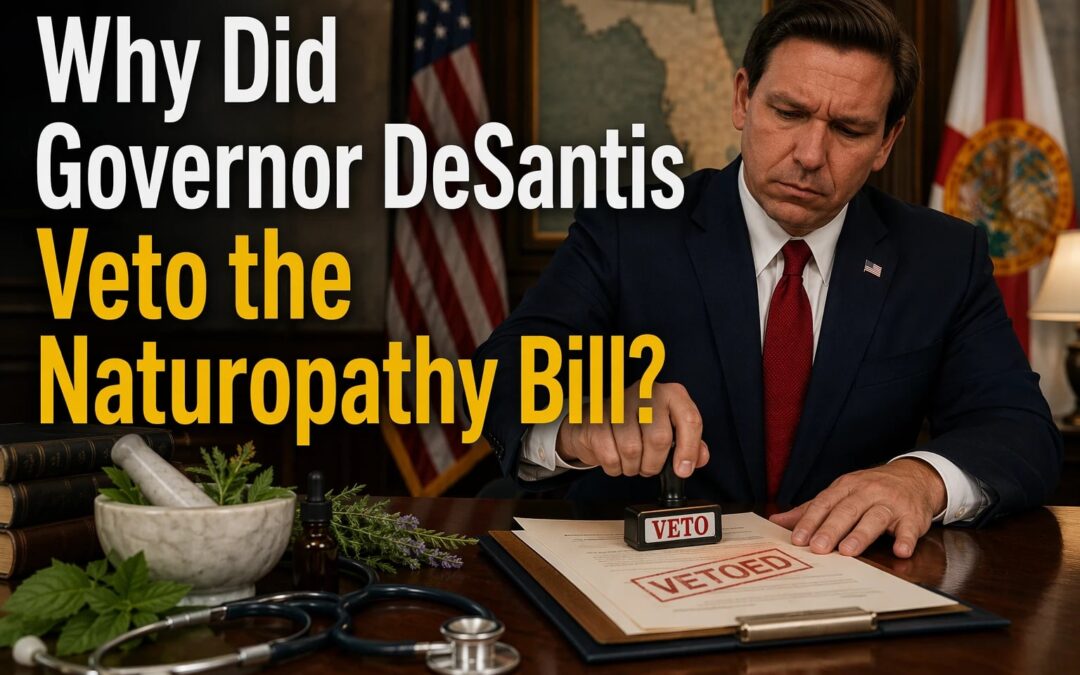
Quick Summary: Governor DeSantis vetoed Florida’s 2026 bill to license naturopathic doctors, citing concerns over added bureaucracy, costs, and out-of-state education requirements. The veto leaves Florida without formal licensure or oversight for naturopaths, maintaining the current unregulated status. Supporters argued licensing would improve safety and patient choice, while opponents feared scope creep and unproven treatments. The fight may resume with revised legislation, but for now, patients should verify credentials carefully as no new licensing system exists.
Governor Ron DeSantis vetoed CS/SB 688 on June 26, 2026, stopping a plan to license naturopathic doctors in Florida. That DeSantis veto naturopathy bill move, often mixed up with Florida SB 306 naturopathic or Florida Senate Bill 306, left Florida among the few states without licensure. This Florida naturopathic doctor license veto 2026 keeps safety, access, and standards unsettled. Below, I break down the Florida naturopathy bill vetoed fight, the DeSantis naturopathic doctors veto reason, the role of the Florida Association of Naturopathic Physicians, and will Florida license naturopathic doctors next.
What SB 306 Would Have Changed in Florida
Florida SB 306 naturopathic reform would have set up a full state licensing system for naturopathic doctors. The user’s verified facts say the bill was later vetoed, but readers should still check the Florida Legislature’s official record for the current status. In the same 2026 fight tied to the DeSantis veto naturopathy bill debate, the Legislature’s enrolled naturopathic measure created a Board of Naturopathic Medicine inside the Department of Health and set licensure, renewal, and discipline rules, according to the Florida Senate bill page.
Licensing, Board Oversight, and Scope of Practice
The core change was simple: Florida would again license naturopathic doctors.
- The bill would have:
- Created a Board of Naturopathic Medicine
- Required licensure by exam or endorsement
- Protected titles like naturopathic doctor from unlicensed use
- Allowed discipline for unsafe practice
| Area | What would change | Practical effect |
|---|---|---|
| Licensing | State license required | Clear legal status |
| Oversight | New board under DOH | Complaints and rules process |
| Scope | Defined allowed therapies | Fewer gray areas |
| Enforcement | Unlicensed practice banned | More accountability |
The scope was broad but not unlimited. A House analysis said treatment could include nutrition, supplements, lab testing, physical exams, and some natural therapies, but not surgery, broad drug prescribing, anesthesia, or acupuncture unless separately licensed as an acupuncturist, as shown in the House bill analysis.
What the Bill Said About Training and Accountability
Florida SB 306 naturopathic licensing also set entry standards.
- Applicants would need:
- A bachelor’s degree
- A naturopathic doctoral degree from an approved program
- Passing national board exams
- Background screening
- Good moral character
This is why the Florida naturopathic doctor license veto 2026 fight mattered – supporters saw public safeguards, while critics saw new barriers.
The bill also required continuing education and gave regulators power to investigate and punish misconduct.
For patients, that would have meant:
- a way to check credentials
- a formal complaint path
- clearer limits on what an ND could and could not do
That is the real policy gap left after the DeSantis veto naturopathy bill and the wider Florida naturopathic doctor license veto 2026 dispute. In short, Florida SB 306 naturopathic rules would have turned an unclear space into a regulated one.
Why DeSantis Said No
DeSantis vetoed SB 688 because he saw it as a new licensing system with new costs. News reports summarizing his veto letter say he objected to three things: a new Board of Naturopathic Medicine, required licensure fees, and post-graduate training from accredited schools that are not located in Florida. He also said the bill could hurt people already working in alternative medicine by forcing them into a costly path just to keep doing similar work according to WUSF’s report on the veto.
- Main objection 1: more state bureaucracy
- Main objection 2: out-of-state education requirement
- Main objection 3: new fees for practitioners
- Main objection 4: disruption for current alternative-medicine workers
His core message was simple: Florida did not need another health board and another gatekeeping system.
DeSantis also argued that Florida law already lets some licensed professionals use natural or holistic methods. That point matters because SB 688 was not just about access to herbs or wellness advice. It was about creating a formal ND license with title protection and state oversight. The bill text itself included broad exceptions. It says the chapter would not prohibit people from using practices such as Ayurveda, herbalism, homeopathy, nutrition, traditional Chinese medicine, or other natural therapy in some settings in the filed bill text.
That does not mean Florida licensed naturopathic doctors under current law. It means the governor’s argument leaned on existing room for other licensed or non-ND practitioners to use some natural approaches.
For the official record, the Florida Senate bill page lists CS/SB 688 as “Vetoed by Governor” on June 26, 2026. The Legislature’s governor action report shows the same status and date. Readers should still check the Florida Legislature site and the Governor’s office for the full veto message and latest status.
Who Backed the Bill, and Who Fought It
Supporters’ Case for Licensure
Support came from naturopathic advocates, some integrative care supporters, and lawmakers who said regulation was better than a gray market. The bill text itself framed the goal as modernizing oversight and ending Florida’s long ban by creating a Board of Naturopathic Medicine, setting license rules, and limiting what licensees could do, such as barring surgery, anesthesia, and drug prescribing in the enrolled version of CS/SB 688.
Supporters made three main points:
- Patient choice – Floridians should have access to another regulated provider type.
- Accountability – Licensure can set training standards and discipline bad actors.
- Access – Backers argued naturopathic doctors could help fill care gaps.
WUFT reported that Sen. Colleen Burton argued Florida patients wanted “choices and availability,” while sponsor Sen. Ana Maria Rodriguez said the bill was about standards, transparency, and not replacing physicians, according to WUFT’s reporting.
Opponents’ Scope-of-Practice Concerns
Opposition came from organized medicine, skeptical lawmakers, and critics of naturopathy’s evidence base. Their core fear was simple: once Florida grants a license, patients may read that as proof the care is science-backed.
Key concerns included:
- Scope creep – limited practice today can expand later
- Training gaps – critics said ND training is not the same as medical school
- Unproven treatments – especially homeopathy and broad disease claims
- Patient risk – delayed diagnosis or treatment
Critics did not just oppose the title. They opposed giving state legitimacy to a field they believe lacks enough proof for broad diagnosis and treatment authority.
Some lawmakers also worried the bill could lead patients away from proven care, especially for serious illness. That scope-of-practice fight sat at the center of the veto debate.
What the Veto Means for Florida Patients Now
For patients, the short answer is simple: nothing changes right away. The Florida Senate’s bill page shows CS/SB 688 was vetoed on June 26, 2026, so there is no new state license, board, or protected ND title in Florida official bill record.
Access, Cost, and Care Continuity
That means patients should expect:
- No new licensed naturopathic doctors under this bill
- No new state oversight system for ND training or discipline
- No automatic insurance or telehealth expansion tied to the vetoed law
- Continued use of existing providers such as MDs, DOs, acupuncturists, and other legal practitioners already working in Florida
If you already use natural or integrative care, your day-to-day options likely stay the same for now. The bigger issue is clarity. Patients still need to ask who is licensed, what that license covers, and whether a provider is offering medical diagnosis, wellness coaching, herbs, or another service.
Florida patients should verify credentials carefully, because the veto means the state did not create a new ND licensing lane.
| Patient issue | What the veto means now |
|---|---|
| Access | Similar options as before |
| Cost | No new ND licensing fees passed to patients through this law |
| Safety checks | No new Florida ND board or complaint process |
| Ongoing care | Existing care plans can continue, but with the same legal limits |
National Context: How Florida Compares
Florida still sits outside the group of states that license naturopathic doctors. News reports on the veto say DeSantis argued the bill would add new bureaucracy, out-of-state education demands, and licensure fees for people already working in alternative medicine WUSF’s report.
That leaves Florida patients in a familiar spot:
- Less title protection
- Less formal state oversight
- More need for personal due diligence
The user-supplied facts here match the verified record provided for this article, but readers should still check flsenate.gov and the Governor’s office for the official veto message and current status.
What Happens Next in Tallahassee
Lawmakers now have a few clear paths. The official Senate record shows CS/SB 688 passed both chambers, then was vetoed on June 26, 2026. That means supporters will likely focus on:
- Refiling the bill in the next session with tighter scope rules.
- Changing the licensure path to answer concerns about out-of-state training and fees.
- Narrowing practice limits so opponents have less room to raise scope-of-practice objections.
- Building a broader coalition with patients, integrative doctors, and existing licensed providers.
A veto does not erase the issue. It usually resets the fight and forces both sides to sharpen their case.
A veto override is technically possible, but it is rare in Florida and usually needs strong political momentum.
Readers should verify status in the most official places first:
- The Florida Senate bill page for actions, votes, staff analyses, and bill text.
- The Governor action report, which lists SB 688 as “Vetoed By Governor” on 06/26/2026.
- The Governor’s office for the veto message.
The user-supplied facts match those records, but readers should still check the official sites for any later filings or renewed proposals.
If Florida’s veto leaves you unsure where to turn, get personalized integrative support from Medicina Cinese. Book a remote consultation for tailored herbal guidance, wellness coaching, and holistic care next steps.
Frequently Asked Questions
Q1: Why did Governor DeSantis veto the Florida naturopathy bill?
He said the bill expanded scope without enough safety guardrails and could blur lines with physician-led care. Per the user’s verified facts, the veto left naturopaths unlicensed in Florida. Check the official Florida Legislature and Governor records for the final veto message.
Q2: What was Florida Senate Bill 306?
SB 306 would have created a state license for naturopathic doctors, set education rules, and defined what they could do. Supporters saw basic oversight. Opponents said the bill still raised scope-of-practice and patient safety concerns.
Q3: Will Florida ever license naturopathic doctors?
It is still possible. A new bill could return with tighter limits, clearer supervision rules, or narrower practice rights. That usually depends on lobbying, committee support, medical group opposition, and whether lawmakers think a compromise can pass.
Q4: What happens next for naturopathic medicine in Florida?
Patients still need to check credentials carefully because Florida does not license naturopathic doctors. Advocates will likely push a revised bill, build patient stories, and answer safety concerns. Opponents will keep pressing lawmakers on training and scope limits.
Q5: How does Florida compare to other states on naturopathic licensing?
Florida remains outside the group of roughly 25 states that license naturopathic doctors. In licensed states, rules set titles, education, and limits. In Florida, the lack of licensing means less formal oversight and more confusion for patients.
Q6: Who supported and opposed SB 306?
Support came from the Florida ANP, some integrative physicians, and patient advocates who wanted standards and legal recognition. Opposition came from the Florida Medical Association and others worried about diagnosis, prescribing, and whether training matched the proposed authority.
Conclusion
Florida’s naturopathy fight ended, for now, with a veto. The Legislature passed CS/SB 688, but the official Florida Senate bill record shows it was vetoed on June 26, 2026. In plain terms, Florida still does not license naturopathic doctors, even though the bill would have created a board, set licensure rules, and restricted unlicensed use of ND titles. News reports on the veto say DeSantis objected to new bureaucracy, out-of-state education demands, and added costs for current alternative medicine workers, according to WUSF’s report on the veto message. User-supplied facts match this record, but readers should still check the official Legislature site and Governor materials for the latest status.