


Quick Summary: Gout is crystal arthritis, causing sudden, severe flares in joints such as the big toe, unlike osteoarthritis from cartilage wear or rheumatoid arthritis from immune attacks. Diagnosis requires more than a blood uric acid test, with joint fluid analysis or imaging used to confirm crystals when needed. Treatment combines early flare control with uric acid-lowering medication, while acupuncture and tailored Chinese herbal support may ease symptoms alongside prescribed care.
A hot, red, exquisitely tender big toe at 3am is how gout arthritis often starts. No injury, no warning. Many people blame a bunion or a sprain, so crystals keep settling in the joint. This guide clears up the gout vs arthritis confusion, compares the main arthritis types, shows how gout symptoms are confirmed, and explains where acupuncture and Chinese herbal support fit alongside standard gout treatment.
What Gout Arthritis Is and How It Differs From Other Arthritis Types
Gout arthritis is an inflammatory arthritis caused by uric acid crystals that form inside a joint, triggering sudden, severe attacks of pain, swelling and redness. Most other arthritis types come from wear on cartilage or an overactive immune system, not crystals.
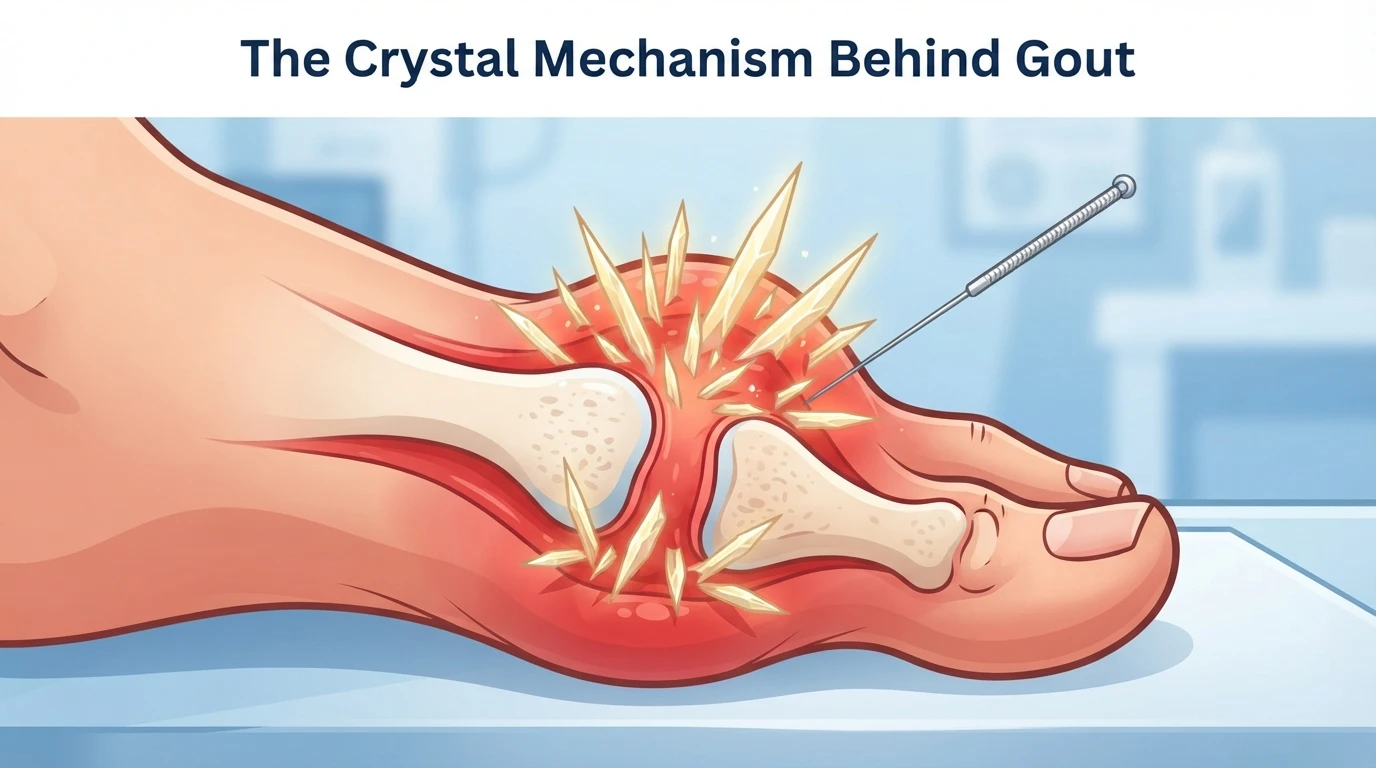
The Crystal Mechanism Behind Gout
When urate levels in the blood stay high, monosodium urate crystals settle in cooler joints, usually the big toe. Even a small crystal deposit sparks intense inflammation. Some people turn to acupuncture for pain relief during flares.
Gout, Osteoarthritis and Rheumatoid Arthritis Side by Side
The fastest way to tell arthritis types apart is to compare where and how they strike:
| Feature | Gout | Osteoarthritis | Rheumatoid Arthritis |
|---|---|---|---|
| Cause | Uric acid crystals | Cartilage wear | Immune attack on joints |
| Onset | Sudden, often overnight | Slow, over years | Gradual, symmetric |
| Typical joints | Big toe, ankle, knee | Knees, hips, hands | Wrists, fingers, feet |
| Pattern | Recurring flares | Constant, worsens with use | Persistent stiffness |
Pseudogout mimics gout but involves calcium crystals, so joint testing matters.
Gout Symptoms and the Early Signs to Watch For
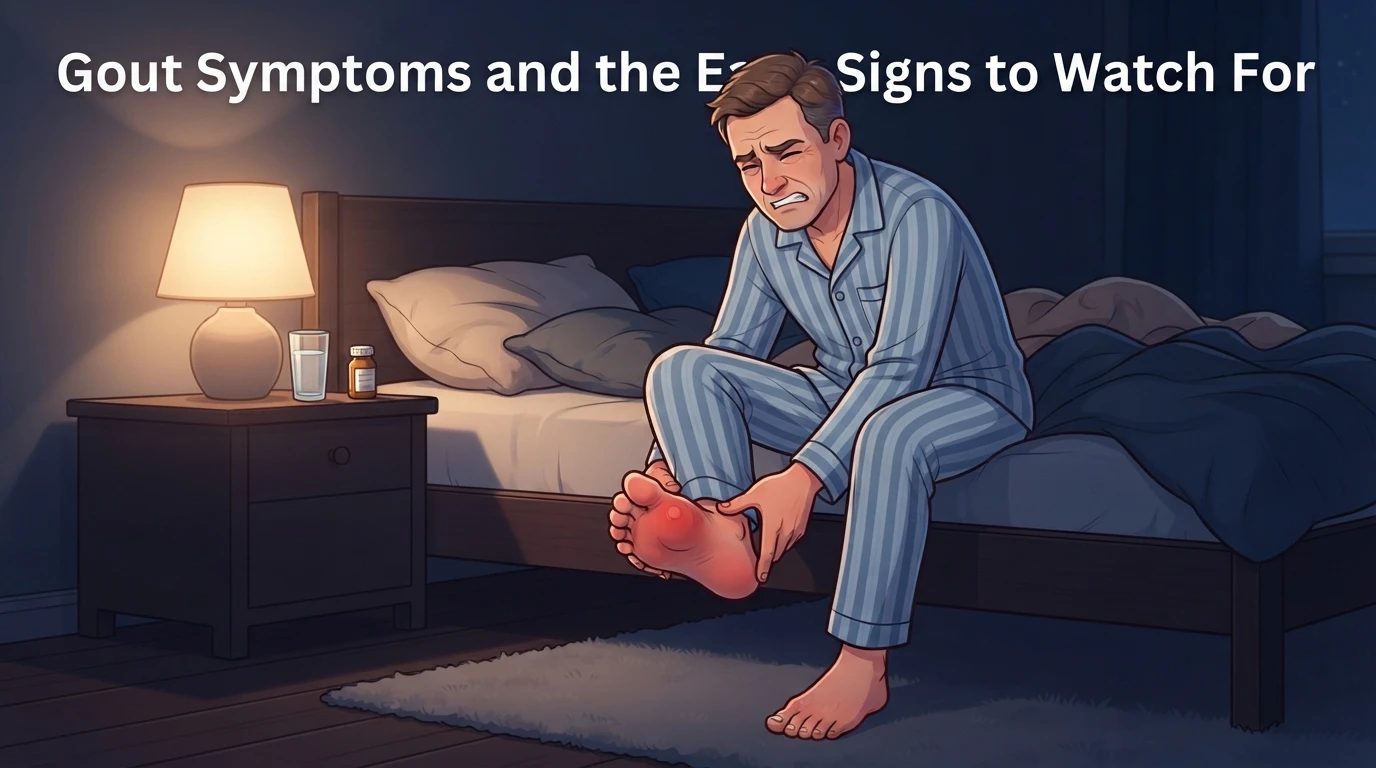
The Classic First Attack
Gout symptoms arrive fast: severe pain, redness and swelling, often in the big toe at night. Pain peaks within 8-12 hours, and even a bedsheet can hurt, according to Medscape’s clinical overview. Fever and peeling skin over the joint can follow.
How to Tell Gout From Osteoarthritis and Rheumatoid Arthritis
- Onset: gout hits in hours; osteoarthritis builds over years; rheumatoid arthritis (RA) grows over weeks.
- Joint pattern: gout favors one joint, often the toe or ankle; osteoarthritis hits weight-bearing joints; RA hits hands symmetrically.
- Stiffness: gout brings intense short bursts; RA causes morning stiffness lasting over an hour.
Gout or Pseudogout: The Other Crystal Arthritis
Pseudogout, caused by calcium pyrophosphate crystals, mimics gout with sudden pain but usually strikes the knee or wrist instead, as Mayo Clinic explains.
How Gout Is Diagnosed and Confirmed
Doctors confirm gout through a short pathway: symptoms and exam, a blood uric acid test, then joint fluid analysis or imaging if the picture is unclear.
Blood Uric Acid Tests and Why Levels Can Mislead
A blood test measures uric acid, but it cannot confirm gout on its own. Levels often drop to normal during a flare, and many people with high levels never get attacks, so doctors read the result alongside your symptoms.
Joint Aspiration and Imaging for Definitive Confirmation
The gold standard is joint aspiration: a needle draws fluid from the swollen joint, and a lab looks for needle-shaped urate crystals under a microscope. When aspiration is not possible, ultrasound or a dual-energy CT can show crystal deposits instead.
Treatment, Prevention and Where Acupuncture and Chinese Herbal Medicine Fit
Gout treatment works in two layers: calming the flare, then lowering uric acid so flares stop.
| Flare control | Long-term prevention |
|---|---|
| NSAIDs, colchicine or steroids, started early; ice and rest help | Allopurinol or febuxostat to reach a serum urate target below 6 mg/dL |
The Traditional Chinese Medicine View of Gout
TCM reads gout as bi syndrome: damp, heat and stagnation blocking the joints. A Chinese herbal prescription aims to clear heat and drain dampness while supporting the whole system. At Medicina Cinese, herbal formulas are tailored to each person’s pattern, never a one-size-fits-all remedy.
What Acupuncture Can and Cannot Do
Acupuncture can ease pain and inflammation between flares, but it does not dissolve urate crystals. Keep taking your prescribed medication.

Still unsure whether that flaring joint is gout? Medicina Cinese offers acupuncture and herbal support that work alongside your doctor’s care, so book a consultation today.
Frequently Asked Questions
Q1: What is gout arthritis and how is it different from other types of arthritis?
Gout is caused by uric acid crystals in a joint, unlike osteoarthritis (wear) or rheumatoid arthritis (immune attack).
Q2: What are the main differences between gout and rheumatoid arthritis?
Gout strikes one joint suddenly, often the big toe; rheumatoid arthritis affects hands symmetrically with morning stiffness over an hour.
Q3: How can you tell if your joint pain is gout or osteoarthritis?
Gout flares overnight with redness and severe pain; osteoarthritis builds slowly and worsens with use.
Q4: What are the early signs of gout arthritis to watch for?
A hot, red, intensely tender big toe at night, often triggered without injury.
Conclusion
Gout arthritis comes from uric acid crystals, not wear or immune damage, so the sudden big-toe flare sets it apart. Diagnosis relies on testing, and treatment pairs medication with acupuncture for pain relief and tailored herbal support.