


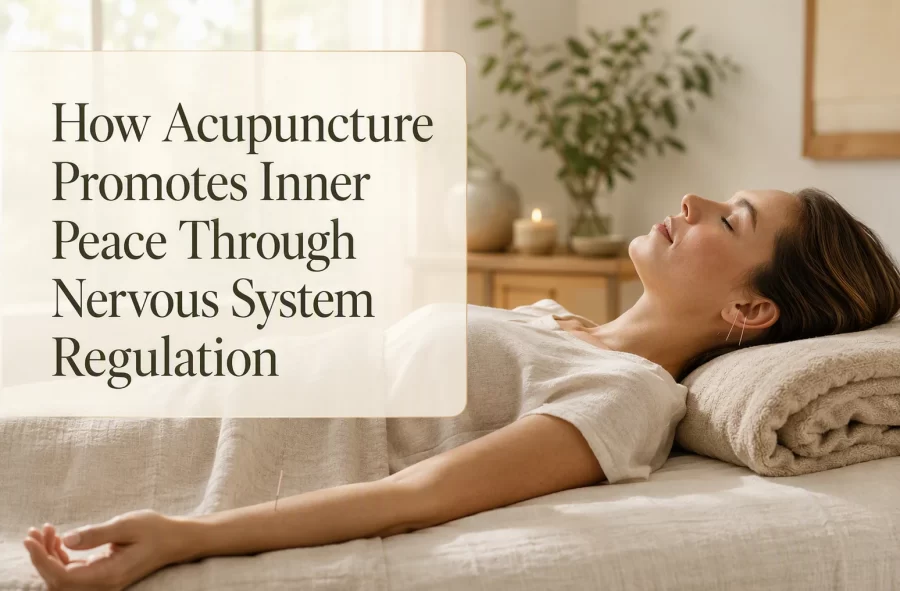
Quick Summary: Acupuncture may promote calm by affecting sensory nerves and nervous system activity, but the evidence for anxiety is promising yet mixed, not proven. Heart-rate variability and vagus nerve measures hint at parasympathetic shifts, but they can’t prove acupuncture changed them. A 2022 review of 27 trials found short-term relief, though researchers demand better long-term data. Treat it as support, not a cure, and always keep medical care in place for anxiety or stress.
If your heart still races after you close the laptop, inner peace acupuncture is not a mystical switch. It may affect sensory signals linked to stress control. This guide explains what the acupuncture nervous system link can and cannot show. You will learn where acupuncture for calm, acupuncture stress relief, and acupuncture relaxation benefits fit, using evidence with clear limits. Inner peace acupuncture can support care, not replace medical help.
How Acupuncture May Shift the Body from Alarm Toward Regulation
From Needle Stimulation to Brain Processing
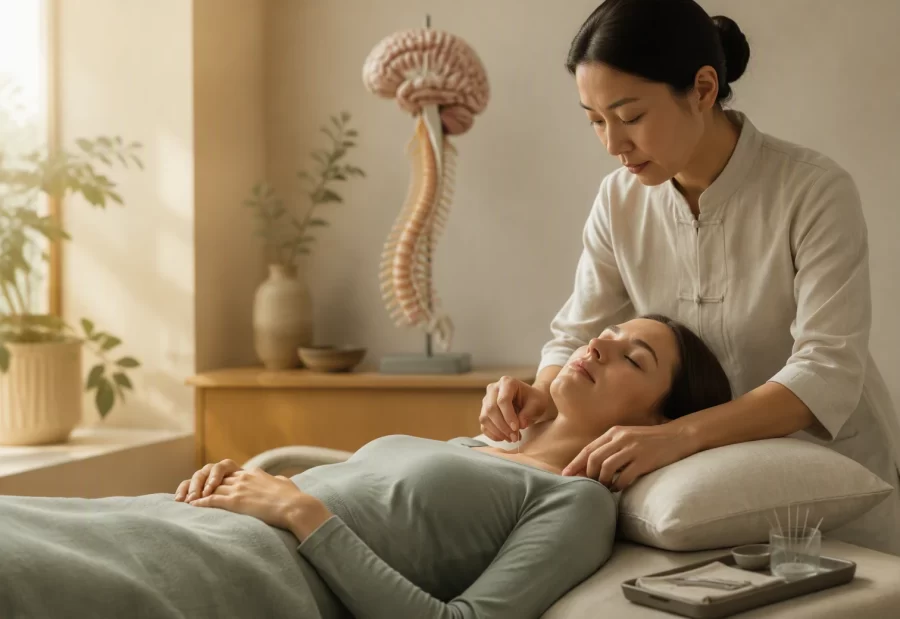
Fine needles stimulate local sensory nerves and tissue. Signals then travel to the spinal cord and brain, where they may influence how the body processes discomfort and stress. Imaging studies suggest acupuncture can affect nervous system function, though the full pathway remains unclear, according to NCCIH.
Sympathetic and Parasympathetic Balance
Stress can keep the sympathetic system in an alert state: tight muscles, fast thoughts, shallow breathing. Acupuncture may support a calmer parasympathetic response for some people, but this is a working theory, not a proven cure for anxiety.
Research on acupuncture for anxiety is promising but still mixed. Larger, better-designed trials are needed.
- Expect gradual changes, not an instant switch.
- Pair sessions with sleep, movement, and clinical care when needed.
Also Read: Acupuncture vs Herbal Medicine: Which Fits Your Symptoms?
What Heart-Rate Variability and the Vagus Nerve Can, and Cannot, Tell You
Why Researchers Measure Heart-Rate Variability
Heart-rate variability, or HRV, tracks small changes between heartbeats. Researchers use it as a non-invasive clue to how the heart responds to rest, breathing, effort, and stress. A recent review describes HRV as a surrogate for autonomic nervous system responsiveness.
Tip: Compare your own readings under similar conditions. One low score after poor sleep does not diagnose burnout.
The Vagus Nerve Hypothesis
The vagus nerve helps slow the heart and supports parasympathetic activity. Higher HRV may reflect stronger cardiac vagal influence in a calm setting. It cannot measure vagus nerve activity throughout the whole body or prove that acupuncture changed it. Research on HRV limits warns against treating one metric as a full stress test.
Also Read: Acupuncture in Lugano: Benefits, Costs, and Sessions Explained
What the Evidence Says About Acupuncture for Stress and Anxiety
Relaxation During a Session Versus Lasting Change
Many people feel calmer during or soon after a session. That is a real experience, but it does not prove lasting change. Acupuncture may affect nervous system function, yet its full mechanism remains unclear, according to NCCIH.
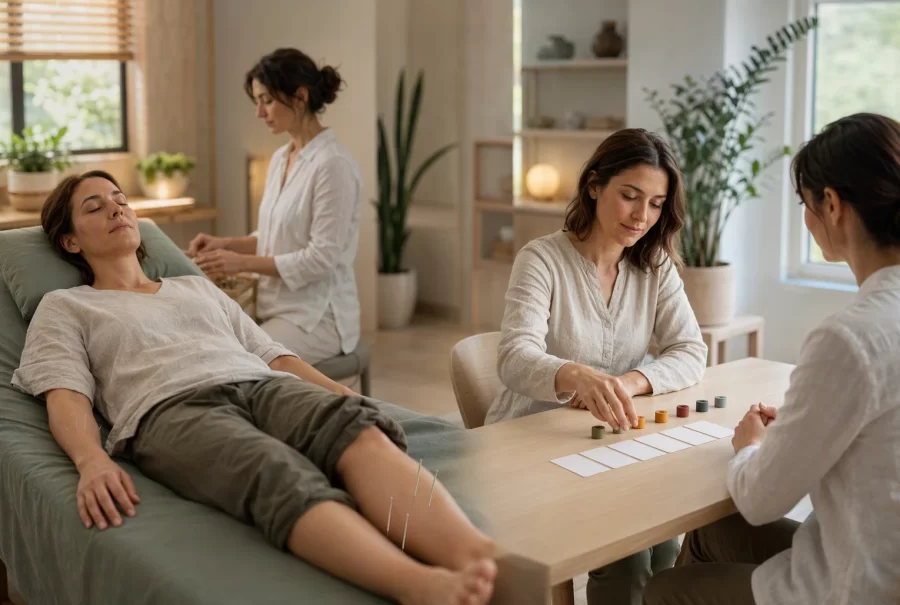
Treat the first session as useful feedback, not a promise of a cure.
How Strong Is the Anxiety Evidence?
The evidence is promising but limited. A 2022 review of 27 trials involving 1,782 people found lower anxiety symptoms, but researchers still called for better trials, notes NCCIH.
| What evidence supports | What remains unclear |
|---|---|
| Short-term symptom relief for some people | Long-term benefit and best treatment plan |
| Use alongside standard care | Whether it treats anxiety disorders alone |
- Choose a qualified practitioner.
- Keep medical or mental health care in place.
Also Read: Burnout Recovery: How Tai Chi and TCM May Restore Energy
How to Explore Inner Peace Acupuncture Safely
Start with a qualified practitioner who uses single-use sterile needles. NCCIH notes that serious problems are rare, but poor technique can cause harm.
- Share your health history, medicines, pregnancy status, and any pacemaker.
- Ask what sensations and short-term effects to expect.
- Set a simple goal, such as less muscle tension or better sleep.
- Keep medical care in place for anxiety, depression, or burnout.
| Ask before booking | Why it matters |
|---|---|
| What training do you have? | Skill affects safety |
| Are needles sterile and disposable? | Lowers infection risk |
Stop and seek medical advice for chest pain, fainting, severe distress, or worsening symptoms.

Feel calmer with a personalised plan from Medicina Cinese, combining acupuncture, herbal care, and wellness coaching for nervous system support.
Frequently Asked Questions
Q1: What is acupuncture and how does it promote inner peace?
Acupuncture uses fine needles at selected body points. Many people feel calmer after treatment, likely through relaxation responses, focused rest, and changes in pain and stress signalling.
Q2: How does acupuncture regulate the nervous system?
It may support the parasympathetic “rest and digest” response. Heart rate, muscle tension, and stress signals can settle during treatment, though individual responses differ.
Q3: Can acupuncture help with anxiety and stress?
It can be a useful support alongside sleep, movement, therapy, and medical care. Seek prompt clinical help for panic, severe anxiety, or thoughts of self-harm.
Q4: What is the science behind acupuncture for inner peace?
Research suggests acupuncture may affect pain pathways and autonomic activity. Studies on anxiety are promising but mixed, so it should not replace proven mental health treatment.
Conclusion
Acupuncture may support calm by influencing nervous system activity, yet anxiety evidence remains limited. NCCIH notes that stronger trials are needed. Use it as support, not a replacement for mental health care.