



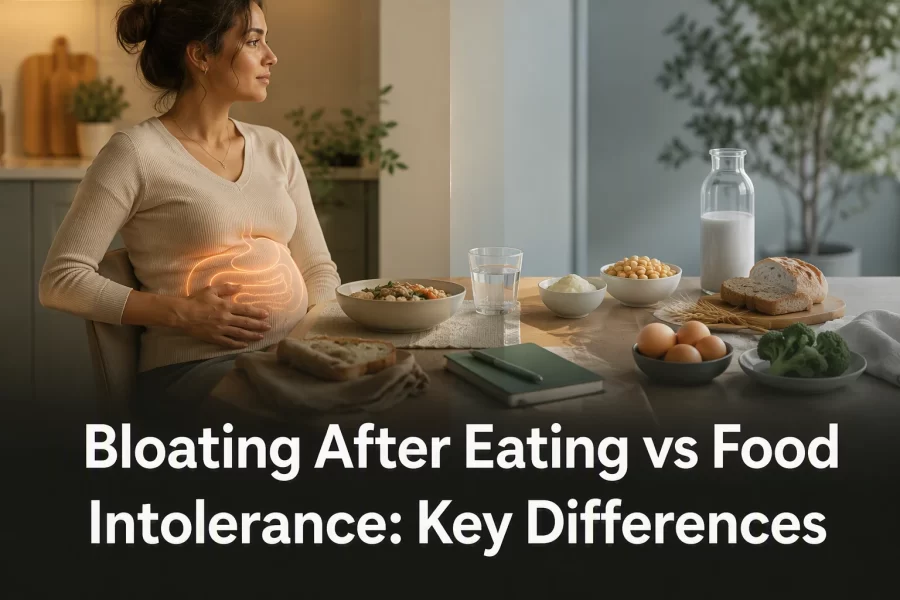
Quick Summary: Post-meal bloating is usually just a short-lived reaction to how much or how fast you eat, not proof of food intolerance. To suspect intolerance, you should see the same food trigger bloating plus cramps, diarrhea, or nausea repeatedly. Keep a food and symptom diary for two weeks, and see a doctor before cutting out foods – especially for weight loss, severe pain, or ongoing diarrhea. Breath tests can confirm lactose issues when patterns point that way.
A swollen abdomen after lunch does not automatically mean food intolerance. Pancia gonfia dopo mangiato may stem from fast eating, fermentable foods, or stress. Bloating after eating is a symptom. This bloating vs intolerance guide reviews timing, dose, and food intolerance symptoms, so you can seek medical advice before restrictive diets or herbal treatment.
Bloating After Eating vs Food Intolerance: At a Glance
| Post-meal bloating | Food intolerance | |
|---|---|---|
| Typical trigger | Large meals, fast eating, swallowed air, carbonation, fermentation, constipation, stress, or altered motility | A specific substance such as lactose or another clinically identified food component |
| Timing | During or soon after meals; may vary from day to day | Repeatedly after exposure, with timing varying by the underlying mechanism |
| Dose response | May relate to meal size, eating speed, or food composition rather than one food | Often dose-dependent, especially with lactose malabsorption |
| Associated symptoms | Fullness, visible distension, belching, flatulence, or mild discomfort | Bloating with cramps, diarrhea, nausea, vomiting, or other reproducible symptoms |
| How it is assessed | Clinical history, symptom and meal diary, and evaluation for other causes if persistent | Medical history, exclusion and supervised reintroduction, and validated tests where appropriate |
| Best next step | Review meal habits and seek assessment if recurrent, severe, or accompanied by warning signs | Consult a doctor before removing foods or beginning a restricted diet |
How Post-meal bloating and Food intolerance Compare
Post-meal bloating
This is a short-lived feeling of fullness, gas, or a swollen abdomen after meals. Pancia gonfia dopo mangiato often follows large meals, fast eating, fizzy drinks, stress, or constipation, and can change from one day to the next. A meal and symptom diary helps spot patterns.
Food intolerance
Food intolerance is a repeat reaction to a specific food component, such as lactose, rather than an immune allergy. It may cause bloating, cramps, diarrhoea, or nausea after exposure, often depending on the amount eaten, as NHS guidance explains. Speak to a doctor before cutting out foods.
What Causes a Bloated Stomach After Eating?
When the Meal, Not One Ingredient, Is the Main Trigger
A bloated stomach after eating often comes from how and how much you eat, not one “bad” food. Fast meals, large portions, fizzy drinks, gum, and talking while chewing can make you swallow more air. Gut bacteria also make gas while breaking down some carbs, especially after a heavy meal, as NIDDK explains.

| Meal pattern | Why it may bloat you |
|---|---|
| Eating quickly | More swallowed air |
| Large rich meal | Slower stomach emptying |
| Fizzy drink | Extra gas in the stomach |
Try smaller meals, slow your pace, and note whether symptoms settle before cutting out foods.
- Eat sitting down.
- Chew well.
- Skip fizzy drinks for one week.
How to Tell If Bloating Is Caused by Food Intolerance
The Four Clues That Increase Suspicion
Food intolerance is more likely when the pattern is clear, not random.
- The same food triggers symptoms several times, such as milk, whey, onions, or fruit juice.
- Symptoms follow a repeatable timing, often within a few hours.
- Bloating comes with gas, cramps, loose stools, or nausea. Lactose intolerance commonly causes this group of symptoms after dairy according to NIDDK.
- Symptoms ease when you avoid the food, then return after reintroducing it.

Keep a food and symptom diary for two weeks. A clinician can use it to guide safe testing. Do not cut out major food groups long term without advice.
Bloating vs Intolerance: Diagnosis, Safety, and What to Do Next
When an Integrative Consultation May Help
Track meals, timing, stress, bowel changes, and symptoms for two weeks. A clinician can review the pattern and rule out causes that mimic intolerance. For example, hydrogen breath tests can assess lactose malabsorption.
Seek medical care promptly for weight loss, blood in stool, fever, severe pain, or ongoing diarrhea.
At Medicina Cinese, an integrative consultation may support sleep, stress, meal habits, and symptom relief alongside medical diagnosis. Do not cut out major food groups without guidance.
Which Pattern Fits Your Pancia Gonfia Dopo Mangiato?
| Pattern | What it may suggest |
|---|---|
| Bloating after rushed, large, fizzy, or high-fibre meals | Common gas or swallowed air |
| Symptoms after the same food, plus diarrhoea or cramps | Possible intolerance |
| Symptoms after milk, yogurt, or ice cream | Lactose intolerance is worth checking |
Keep a 7-day meal and symptom diary. Note food, portion, timing, stress, and bowel changes. NIDDK advises this approach for gas symptoms.
Seek medical advice for weight loss, blood in stool, severe pain, or new persistent symptoms.

Still unsure what triggers your bloating? Book a personalized review with Medicina Cinese for practical diet, stress, acupuncture, and herbal support.
Frequently Asked Questions
Q1: What causes a bloated stomach after eating?
Fast eating, large meals, gas, constipation, stress, or certain foods can cause it.
Q2: What causes bloating after eating and how to fix it?
Keep a food and symptom diary, eat slowly, and seek care if symptoms persist.
Q3: How to tell if bloating is caused by food intolerance?
Symptoms often repeat after one food and may include cramps, diarrhoea, or skin changes.
Q4: What are the key differences between bloating and food intolerance?
Bloating is a symptom. Intolerance is a repeat reaction to a specific food.
Conclusion
Post-meal bloating is often linked to eating habits, while repeat symptoms after one food may suggest intolerance. Track patterns and seek medical advice for pain, weight loss, or bowel changes.
Trackback/Pingback