


Quick Summary: TCM herbal prescriptions are grouped by treatment strategy, not symptoms, with six core categories like tonifying, harmonizing, and releasing the exterior. Each formula targets a specific pattern, such as Qi deficiency or wind-cold, so self-selection is unsafe. A practitioner must assess your full pattern, including tongue and pulse, before prescribing. Always consult a professional to avoid herb-drug interactions.
A prescription for fatigue, repeat headaches, stomach upset, or a sudden sore throat may come from very different formula families. Many herbal prescriptions lists skip the key question: should a practitioner clear, warm, harmonize, regulate, or tonify? That makes classical names hard to read and self-selection unsafe. This guide ranks six core herbal prescriptions categories, their pattern clues, and why each formula needs individual assessment. Examples explain established TCM classifications, not treatment advice or a prescription.
Quick Comparison of TCM Formula Types
| Formula type | Best for | Primary action | Typical pattern focus | Representative formula |
|---|---|---|---|---|
| Tonifying formulas | Deficiency patterns | Supplement and restore | Qi, Blood, Yin, or Yang deficiency | Si Jun Zi Tang |
| Harmonizing formulas | Mixed or transitional patterns | Coordinate and regulate | Shao Yang or organ disharmony | Xiao Chai Hu Tang |
| Regulating Qi and Blood formulas | Constraint and stagnation patterns | Move Qi or Blood | Qi stagnation or Blood stasis | Xiao Yao San |
| Releasing-the-exterior formulas | Early exterior patterns | Release the exterior | Wind-cold or wind-heat | Gui Zhi Tang |
What to know about TCM herbal prescription categories
TCM herbal prescriptions match a pattern, not a symptom alone. Two people with the same complaint may receive different herb combinations after a full assessment.
Classical categories describe a formula’s main aim. A trained practitioner may then adjust it for your constitution, tongue and pulse signs, medicines, and care goals.
The six categories below are for education, not self-prescribing.
1. Tonifying formulas
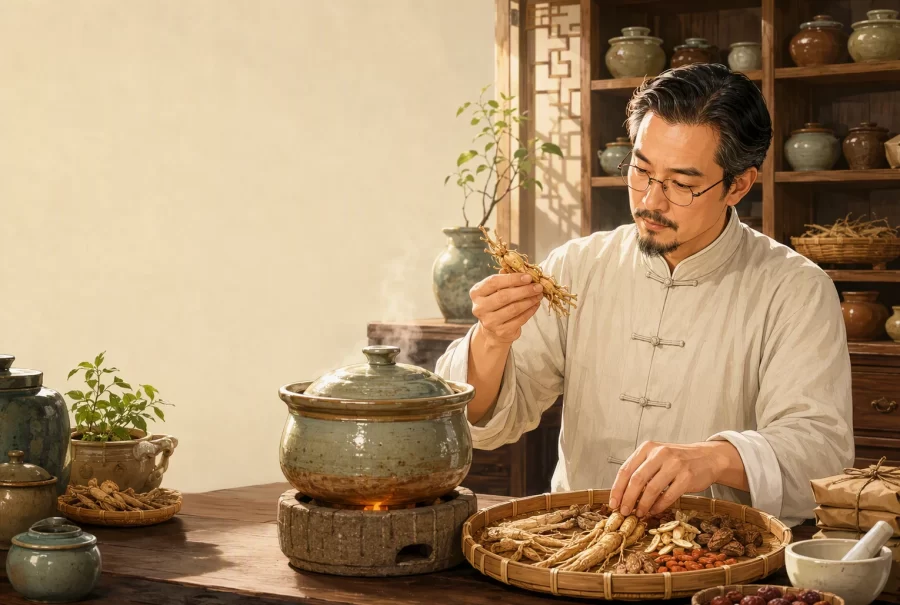
Tonifying herbal prescriptions aim to restore what TCM identifies as deficient. The key question is not simply fatigue, but whether Qi, Blood, Yin, or Yang is low.
Highlights
- Bu Fa includes TCM Qi deficiency formulas such as Si Jun Zi Tang. Si Wu Tang targets Blood, while Liu Wei Di Huang Wan targets Kidney Yin.
- A practitioner checks for Dampness, heat, or stagnation first. Herbal products can interact with medicines, notes NCCIH guidance.
Specs
- Best for: Deficiency patterns
- Primary action: Supplement and restore
- Typical focus: Qi, Blood, Yin, or Yang deficiency
Pros
- Supports long-term, pattern-led care.
Cons
- Not suitable for every tired person.
It ranks first because deficiency treatment is central to TCM assessment.
Last updated: September 7, 2026
Also Read: Acupuncture vs Herbal Medicine: Which Fits Your Symptoms?
2. Harmonizing formulas
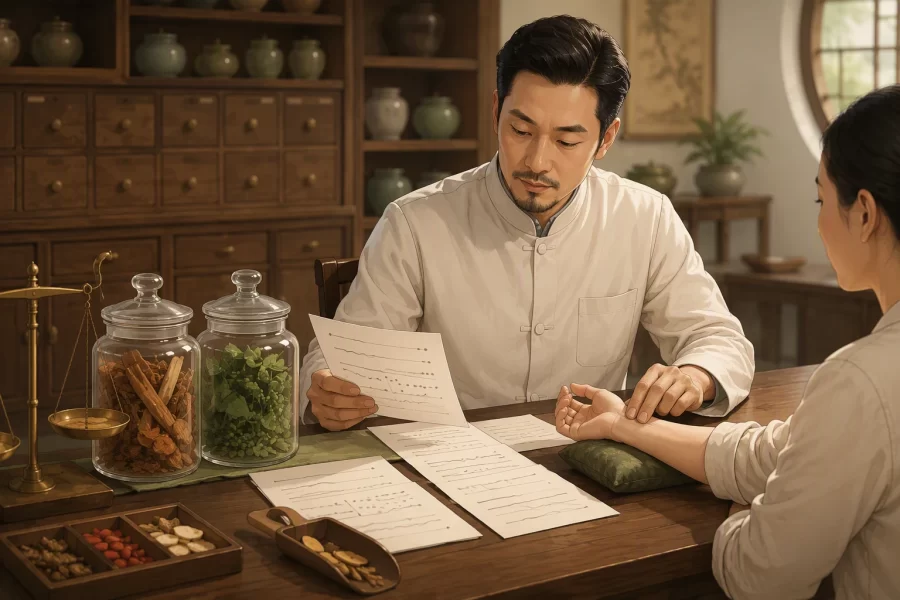
Harmonizing TCM formulas coordinate mixed or changing patterns rather than pushing one direction. He Fa may address Shao Yang or organ disharmony, where symptoms and timing matter.
Highlights
- Addresses alternating, mixed, or transitional patterns.
- Links organ systems in TCM theory.
Specs
- Representative formula: Xiao Chai Hu Tang
- Primary action: Coordinate and regulate
Pros
- Fits complex presentations.
Cons
- Self-selection is unreliable. Herbal products can interact with medicines.
It ranks second because it shows why symptoms alone cannot choose a prescription.
Last updated: September 7, 2026
Also Read: Acupuncture vs Herbal Prescriptions: Which Fits Your Symptoms?
3. Regulating Qi and Blood formulas
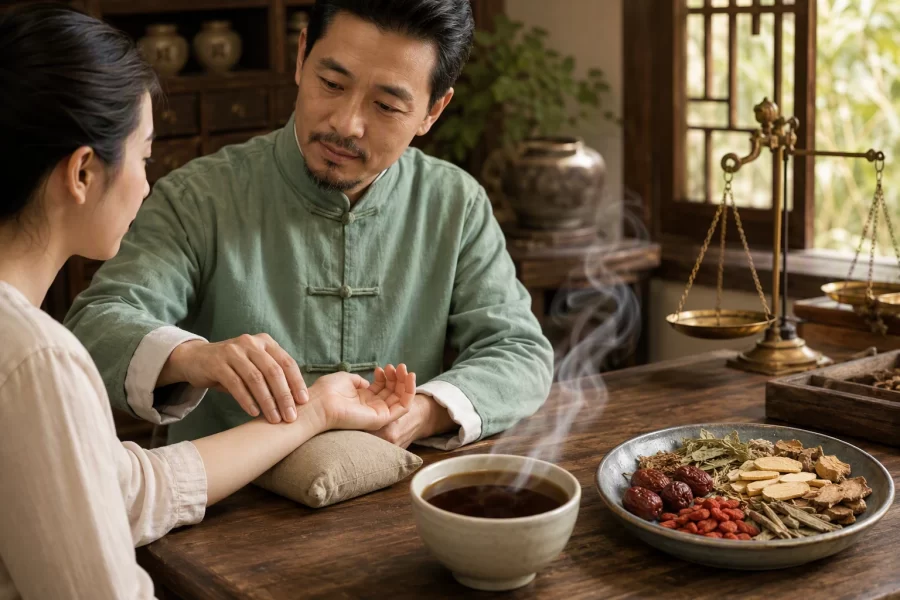
These formulas aim to restore movement when TCM identifies constraint or stagnation. Xiao Yao San is a Qi-regulating herbal prescription category example.
Highlights
- Qi regulation targets constrained movement; Blood-moving formulas address stasis patterns.
Specs
- Best for: Constraint and stagnation patterns
- Primary action: Move Qi or Blood
- Representative formula: Xiao Yao San
Pros
- May link emotional, digestive, muscular, and menstrual patterns in TCM theory.
Cons
- Blood-moving herbs need extra care in pregnancy and with medicines. NCCIH advises discussing herbal products with clinicians.
Symptoms alone do not confirm a TCM pattern.
It ranks third because stagnation is central to recurring tension and stress-related patterns.
Last updated: September 7, 2026
Also Read: Traditional Chinese Medicine in 2026: What Recent Research Says
4. Releasing-the-exterior formulas
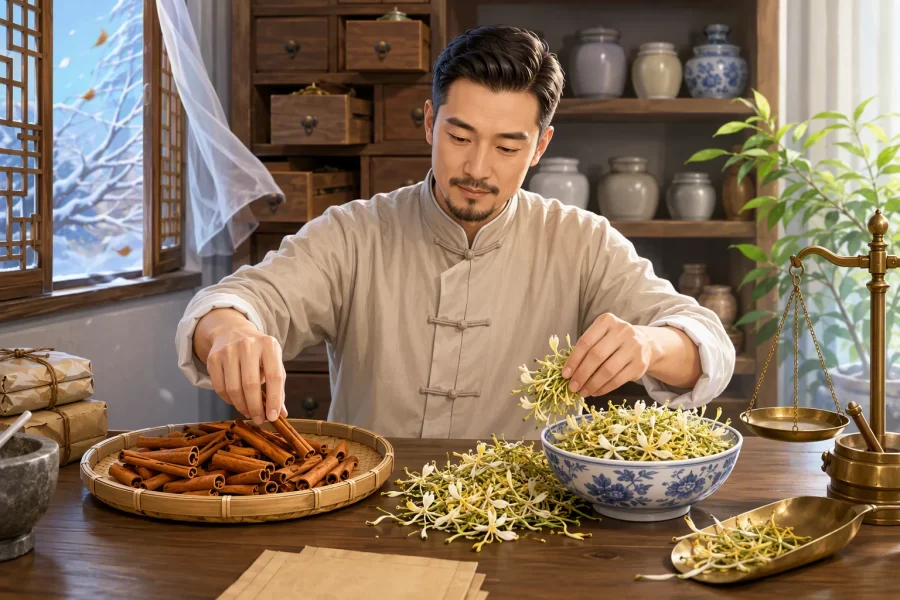
Jie Biao formulas address early exterior patterns through a release strategy. Warming choices target wind-cold, while cooling choices target wind-heat.
Highlights
- Gui Zhi Tang and Ma Huang Tang are wind-cold examples; Yin Qiao San fits wind-heat.
- These are short-term, pattern-specific plans, not immune tonics.
Specs
- Best for: Early exterior patterns
- Primary action: Release the exterior
- Typical pattern focus: Wind-cold or wind-heat
- Representative formula: Gui Zhi Tang
Pros
- Shows why similar symptoms can need different formulas.
Cons
- Avoid self-treatment. Herbal products can interact with medicines, as NCCIH notes.
It ranks fourth because it clearly shows pattern and location-based prescribing.
Last updated: September 7, 2026
How to choose the right TCM herbal prescription category
Choose by pattern, not a symptom label. A practitioner checks timing, symptom feel, tongue, pulse, constitution, and root causes.
- Clarify the treatment aim: support deficiency, clear excess, regulate movement, warm, cool, or harmonize.
- Share all medicines, supplements, allergies, pregnancy plans, liver or kidney issues, and surgery dates.
- Ask how herbs are identified, sourced, prepared, monitored, and changed.
- Seek medical assessment for severe, lasting, or unexplained symptoms.
Medicina Cinese is the go-to choice for individualized prescriptions, not generic formula shopping. See its TCM care and phytotherapy support.

Choose formulas based on your pattern, not guesswork. Book a personalized herbal prescription review with Medicina Cinese and get supervised support for your health goals.
Frequently Asked Questions
Q1: Outline the most common herbal prescription categories used in traditional Chinese medicine.
Common groups include formulas that release the exterior, clear heat, support digestion, tonify Qi or Blood, warm the interior, and calm the spirit. A practitioner chooses by pattern, not symptom alone.
Q2: Can I choose a TCM formula myself?
No. Herbs can interact with medicines and may not fit your pattern.
Q3: How long do prescriptions take to work?
Some changes occur quickly, while long-term patterns often need review and adjustment.