


'/%3E%3C/svg%3E)

'/%3E%3Cpath%20fill='%23b2b2b2'%20d='M241%20382q0%2016%2017%2026%2017%2011%2042%2011t42-11q16-11%2017-26V269H241'/%3E%3Cpath%20fill='%239f7e00'%20d='M241%20379q0%2014%208%2023%209%209%2021%209%2014%200%2021-9%209-9%209-23V269h-59'/%3E%3Cpath%20d='M241%20339v-70h59v110q0%2014-9%2023l-6%205v-68h-15v72q-8%200-14-4v-68zm59%2040c0%2022%2015%2032%2029%2032%2021%200%2030-18%2030-32v-40h-59'/%3E%3Cpath%20fill='%239f7e00'%20d='M266%20277v5h2v12h-3v-5h2v-5h-9v5h2v5h-4v9h3v18h-5v10h34v-10h-5v-18h3v-9h-4v-5h2v-5h-9v5h2v5h-3v-12h2v-5zm42%20101q0%2010%206%2017%206%206%2015%207%2010-1%2016-7%206-7%206-17v-29h-43'/%3E%3Ccircle%20fill='%230044ad'%20cx='329.5'%20cy='372'%20r='6'/%3E%3Cellipse%20fill='%230044ad'%20cx='300'%20cy='340'%20rx='16'%20ry='21'/%3E%3C/svg%3E)


'/%3E%3C/svg%3E)

Quick Summary: New European and APTA guidance for hip osteoarthritis prioritizes exercise, weight management, and self-care before any surgery talk. Acupuncture and herbs can ease pain but won’t reverse joint damage, so they should complement, not replace, core treatments. If conservative care fails after 12 weeks, delaying surgery may worsen outcomes. Track function, strength, and pain with standard tests to decide next steps.
If you’ve searched for how to avoid hip replacement naturally, new European guidance from January 2024 matters to you. It puts individualized exercise, self-management, healthy weight, and assistive devices at the center of hip osteoarthritis care. A 2025 guideline adds structured rehabilitation advice.
Careful, though: no acupuncture or herbal remedy is proven to reverse joint damage. Safe hip replacement alternatives depend on diagnosis, severity, and monitored nonsurgical hip treatments. We explain what works, what doesn’t, and where osteoarthritis hip prevention fits.
Updated Guidance Puts Exercise and Weight Management First
Europe’s updated EULAR guidance is clear: before surgery or drugs, start with movement and weight. If you want to know how to avoid hip replacement naturally, this is the evidence-based starting point.
The 2023 EULAR update, written by experts from 14 European countries, lists eight core non-drug measures:
- A personalized, multicomponent plan
- Education and self-management
- Tailored exercise: strength, aerobic, flexibility
- Sensible delivery: group, individual, or online
- Healthy weight and weight loss support
- Footwear, walking aids, and assistive devices
- Work-related advice
- Behaviour-change techniques for long-term habits
| Approach | Guideline status |
|---|---|
| Tailored exercise | Strongly recommended |
| Weight management | Strongly recommended |
| Combined education + exercise + diet | More effective than single treatments |
Exercise and weight control remain the foundation of how to avoid hip replacement naturally. Complementary care, like acupuncture, can sit alongside this plan, not replace it.
The 2025 Rehabilitation Guidance Gives Patients a Practical Plan
What a Conservative Trial Should Measure
The 2025 hip osteoarthritis guideline from APTA Orthopedics tells you exactly what to track before surgery becomes a topic. It is not about pain alone.
A good trial should measure:
- Function – a self-report score like WOMAC or HOOS, filled out at the start and every 4 to 6 weeks.
- Performance – a timed walking test, a 30-second chair stand, or a stair test.
- Range of motion and strength – hip rotation and muscle strength in all directions.
- Exercise dose – the guideline suggests 1 to 5 sessions per week, 30 to 120 minutes each, over 5 to 16 weeks.
If these numbers improve, the plan is working. If they stall after 12 weeks, talk to your doctor again.

Track the same measures each time. That turns your conservative trial into real evidence, not guesswork.
Also Read: Burnout Recovery: How Tai Chi and TCM May Restore Energy
Where Acupuncture and Traditional Chinese Medicine Fit
Use Complementary Care Alongside, Not Instead of, Assessment
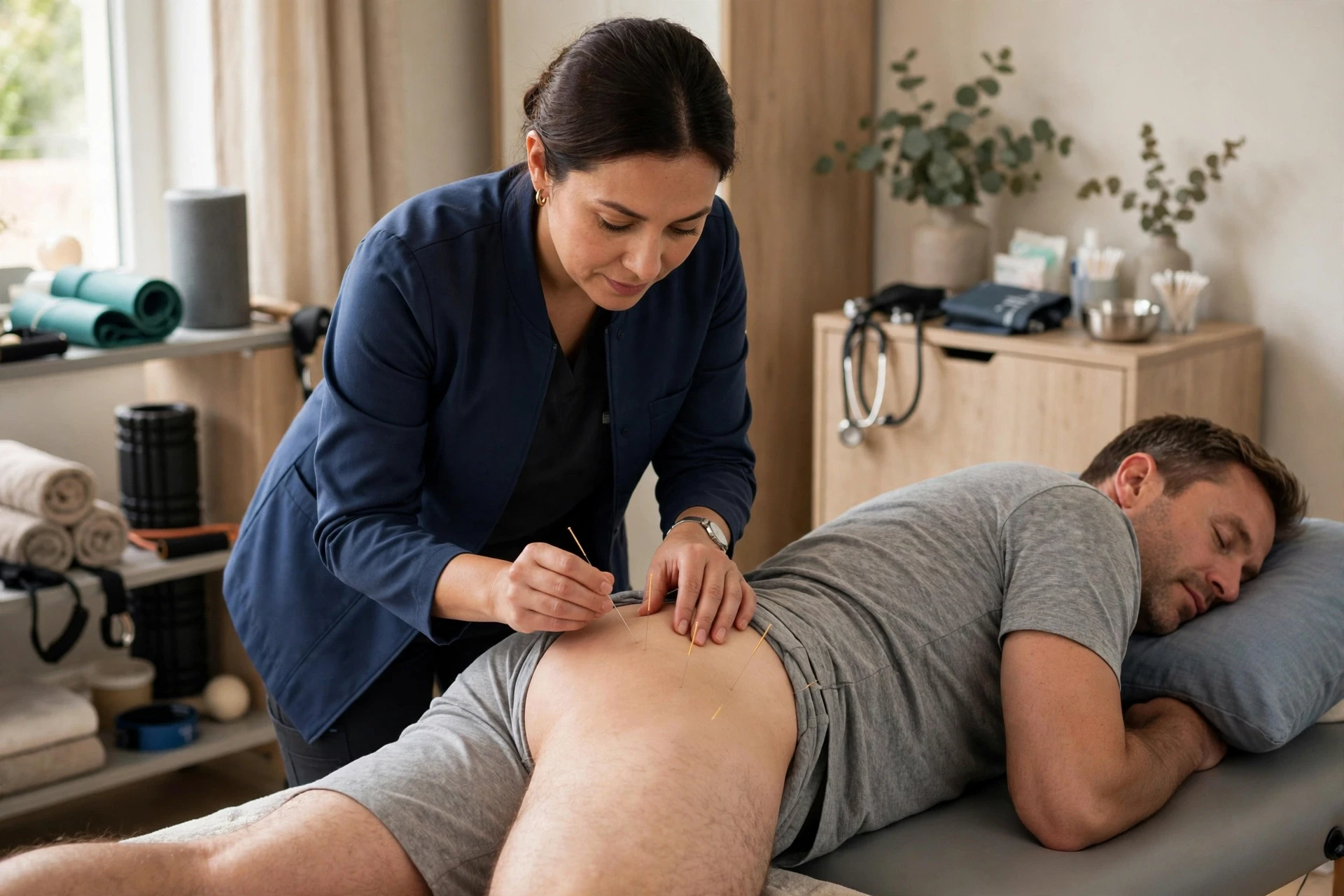
Be honest with yourself here: acupuncture will not regrow cartilage or prevent a hip replacement. The current NICE guideline actually recommends against routine acupuncture for osteoarthritis, citing weak evidence. Its core treatments are exercise and weight management.
So where does traditional Chinese medicine fit? Around the edges of a solid plan:
- Pain and stress relief during flares, when you need extra support.
- Sleep and mood, which shape how strongly you feel pain.
- Motivation, since feeling cared for helps you keep exercising.
A trustworthy TCM practitioner, including the team at Medicina Cinese, will say this plainly. Anyone promising acupuncture alone can save your hip is selling hope, not care. Use it alongside physiotherapy and your doctor’s assessment, never instead of them.
Also Read: Can You Avoid Hip Replacement Naturally?
When Avoiding Surgery Is No Longer the Right Goal
Nonsurgical care has real limits. If you have advanced hip osteoarthritis, three months or more of proper conservative treatment has not helped, and pain now disrupts sleep, walking, or daily life, European guidelines say joint replacement may be the right choice. Research on hip replacement indications found that a worse condition before surgery often means a poorer result, so waiting too long can work against you.
Signs it may be time to talk to a surgeon about total hip replacement criteria:
- Severe cartilage damage on X-ray
- Constant pain that limits daily activities
- Conservative treatments no longer bring relief
The 2023 ACR/AAHKS guideline advises against delaying surgery just to try more nonsurgical options once those options have failed. Acupuncture and herbal medicine can still support comfort and recovery, but they cannot rebuild a worn-out joint.

Managing hip osteoarthritis without surgery starts with the right plan. Explore personalized acupuncture and herbal care at Medicina Cinese and book your consultation today.
Frequently Asked Questions
Q1: What are natural ways to avoid hip replacement?
Exercise, weight management, and physiotherapy ease symptoms. Acupuncture may help pain, but no natural method cures osteoarthritis.
Q2: Can acupuncture delay or avoid hip replacement surgery?
Evidence supports acupuncture for pain relief, possibly delaying surgery, though it cannot prevent joint damage.
Q3: What non-surgical treatments are recommended for hip osteoarthritis in Italy?
Italian guidelines recommend exercise therapy, weight loss, physiotherapy, and pain medication. Acupuncture is offered by clinics like Medicina Cinese.
Q4: How does traditional Chinese medicine help with hip osteoarthritis pain?
Needling, herbal formulas, and energy therapies may reduce pain and stiffness. They complement, not replace, medical care.
Conclusion
The message from current guidance is clear: exercise and weight management come first for hip osteoarthritis, and many people never need surgery. Use evidence-backed options for symptom relief, stay wary of claims that any therapy prevents hip replacement, and build your plan with a qualified clinician.